
Tattoos and MRI Scans: Is It Safe? What the Research Says
Can you have an MRI with tattoos? A study of 330 people with 933 tattoos found a low risk. Why rare burning sensations happen, which tattoos are more likely to react, and what to do before your scan.
 Save
Save
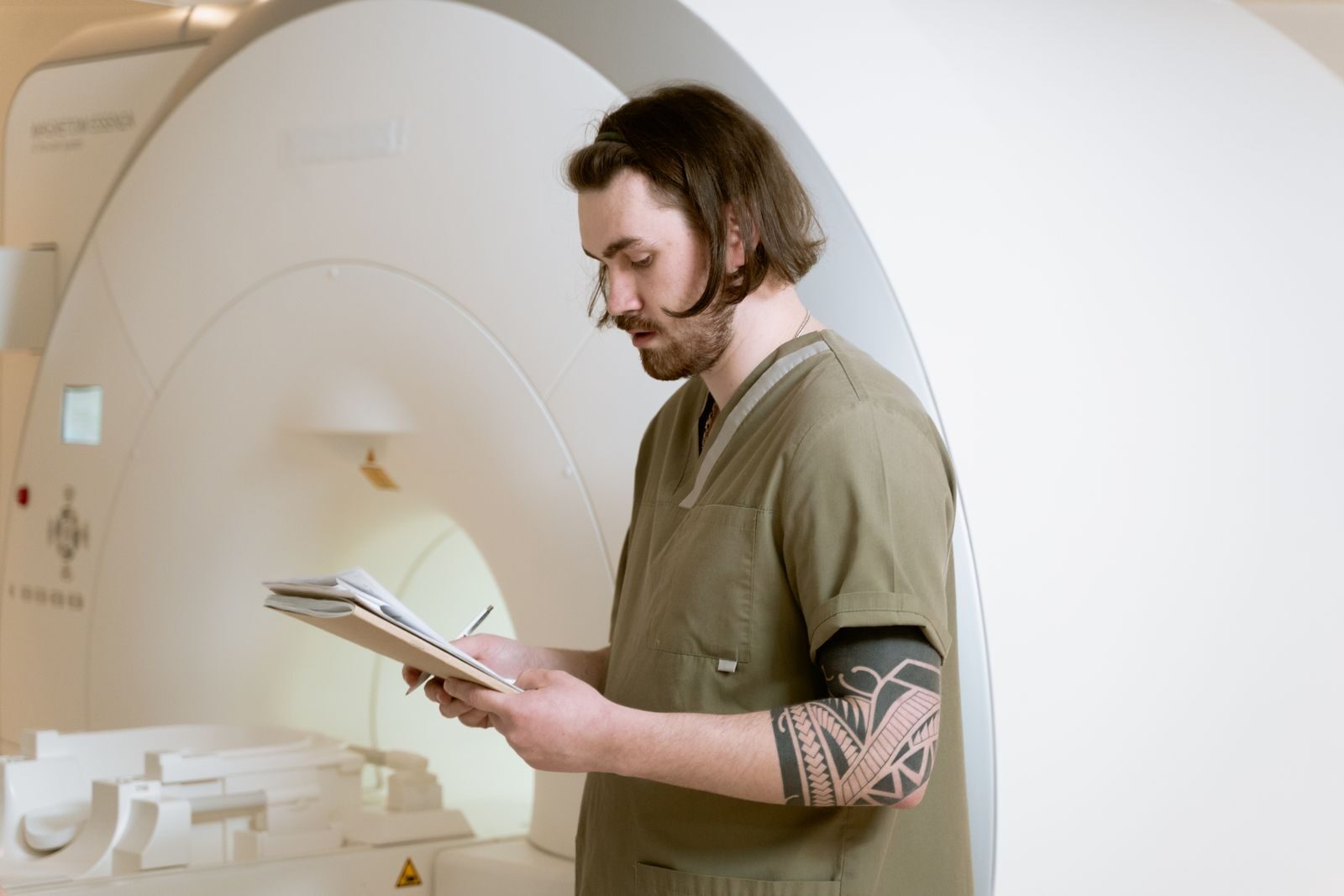
If you have tattoos and your doctor books you for an MRI scan, you may have been asked about them on the safety form, or heard stories about tattoos burning during a scan. It is a reasonable worry. MRI machines use very strong magnetic fields, and some tattoo inks contain traces of metal. Here is what the research says about having an MRI with tattoos.
The good news is that, for the vast majority of people, tattoos do not stop you having an MRI. Here is what the research shows, why rare reactions happen, and what to do before your scan.
The short answer
Tattoos are not normally a reason to avoid or cancel an MRI. Serious problems are rare. The most commonly reported issue is a temporary warm, tingling or burning sensation in the tattooed skin, which usually settles quickly. Always tell the radiographer or technician about your tattoos, and follow the advice of the imaging team, who will weigh the benefits of the scan for you.
What the research shows
The best known study was published in the New England Journal of Medicine in 2019. Researchers followed 330 people with 933 tattoos through 585 MRI sessions on a high-strength 3 Tesla scanner, the kind used in many hospitals. They found a low risk of tattoo-related side effects under the study conditions.
Reported reactions in other research are generally described as burning or stinging sensations in the tattooed area, often short-lived, with symptoms typically resolving within a day or two. Permanent damage appears to be very rare.
The American Academy of Dermatology lists MRI burns among uncommon tattoo reactions, describing usually mild pain, redness and swelling, and advises telling the MRI technician about your tattoos and asking them to stop if you feel burning.
Why a tattoo might react in an MRI
MRI scanners use a powerful magnet and radio waves. Some tattoo inks, especially older inks and some inks used for permanent make-up, can contain iron oxide pigments or metallic impurities.
Laboratory research on cosmetic tattoo inks has identified magnetic iron oxide substances such as magnetite, goethite and hematite and suggested they may be the main cause of the burning sensation some people feel. Researchers have proposed that the magnetic field may stimulate nerves in the skin around these particles.
Several factors may make a reaction more likely:
- Large areas of dense, dark ink, such as heavy blackwork
- Permanent make-up, such as eyeliner and eyebrow tattoos, close to the area being scanned
- Tattoos with loops or ring-like shapes, which some experts suggest may concentrate energy
- Tattoos very close to or inside the area being imaged
Before your MRI: what to do
- Declare every tattoo, including permanent make-up and microblading, on the safety questionnaire.
- Mention recent tattoos. A fresh, still-healing tattoo is an open wound, so tell staff if you had one very recently.
- Do not cancel a scan you need because of tattoos without talking to the imaging team first.
- Speak up during the scan. You will be given a call button. If you feel warmth, tingling or burning in a tattoo, tell the staff straight away so they can pause.
- Follow any precautions they suggest. Some units may place a cool compress or a pad over a tattoo, or adjust how you are positioned.
What if a tattoo reacts?
If you notice redness, swelling or discomfort afterwards, it usually settles on its own within a short time. Keep the area clean, avoid scratching, and use a cool compress. If symptoms are severe, blister, or do not improve within a few days, contact the imaging department or your doctor.
Thinking about a new tattoo and expecting MRIs?
If you have a medical condition that means regular MRI scans, it is worth mentioning it to your tattoo artist and doctor. Reputable artists will be happy to tell you which inks they use. For more on how tattoos interact with your health, see our guides to why tattoos become raised, donating blood with tattoos, and the EU tattoo ink rules.
Sources: Callaghan et al., "Safety of Tattoos in Persons Undergoing MRI," New England Journal of Medicine, 2019; Serup et al., Skin Research and Technology, 2023; American Academy of Dermatology, "Tattoos: 7 unexpected skin reactions." This article is general information, not medical advice.
News Tattoos
Tattoo enthusiast and writer at News Tattoos. Passionate about tattoo art, culture, and the stories behind the ink. Covering the global tattoo community since 2022.
Get one tattoo story a day on Telegram
New guides, meanings and tattoo news, straight to your phone. Free, no spam.
Keep reading
 Tattoo Aftercare & Tips
Why Does My Old Tattoo Itch Years Later? Causes and Relief
Tattoo Aftercare & Tips
Why Does My Old Tattoo Itch Years Later? Causes and Relief
 Tattoo Aftercare & Tips
Why Is My Tattoo Raised? New and Old Tattoos Explained
Tattoo Aftercare & Tips
Why Is My Tattoo Raised? New and Old Tattoos Explained
 Tattoo Aftercare & Tips
Can You Donate Blood With Tattoos? Rules in the UK, US, Canada and Australia
Tattoo Aftercare & Tips
Can You Donate Blood With Tattoos? Rules in the UK, US, Canada and Australia
 Tattoo Aftercare & Tips
Tattoo Pain by Body Part: What the Evidence Actually Says
Tattoo Aftercare & Tips
Tattoo Pain by Body Part: What the Evidence Actually Says