
Working Out After a Tattoo: How Long to Wait Before the Gym
Sweat, friction and stretching can all harm a new tattoo. How long to wait before going back to the gym, which exercises to avoid for arm, leg, back and rib tattoos, and how to protect your ink while you train.
 Save
If training is part of your routine, the idea of taking time off after a new tattoo can be frustrating. The good news is you do not need to stop for weeks. But sweat, friction, stretching and shared gym equipment can all harm a healing tattoo, so it pays to be smart about when and how you go back. Here is when you can go back to the gym after a tattoo, and how to do it safely.
Here is how long to wait before working out after a tattoo, which exercises to avoid depending on placement, and how to protect your ink when you do return.
Why exercise can affect a new tattoo
- Sweat can irritate an open wound and carry bacteria into it.
- Friction from clothing, straps, benches and mats can rub off scabs and ink.
- Stretching and flexing the tattooed skin can crack scabs, especially over joints.
- Gym equipment is touched by many people and can harbour bacteria.
- Increased blood flow during hard exercise can make a very fresh tattoo swell or ooze more.
How long to wait before working out
Everyone heals differently, so use these as guidelines and follow your artist's advice:
- First 48 hours: rest. This is when the tattoo is most open and weeping.
- Days 2 to 7: light activity that does not involve the tattooed area and does not make you sweat heavily, such as walking.
- Around weeks 1 to 2: gradually return to normal training if the tattoo is healing well, avoiding exercises that stretch or rub it.
- Weeks 2 to 4: swimming, saunas, hot yoga and contact sports should wait until the tattoo is fully healed on the surface. See can you swim after a tattoo.
Large pieces, such as a back piece or full sleeve, usually need more time than a small tattoo.
What to avoid by placement
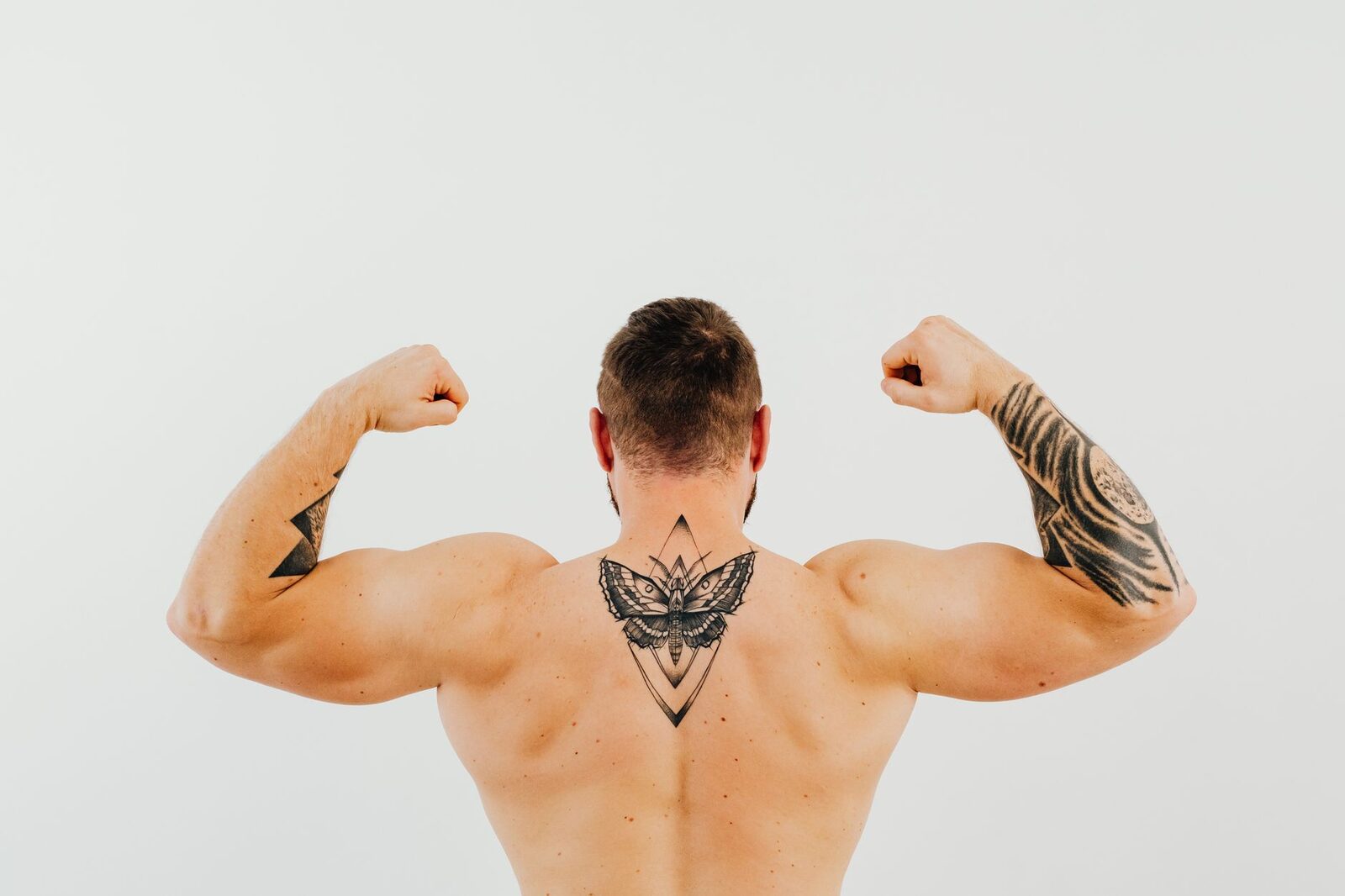
Arm and shoulder tattoos
Heavy pressing, pulling and curls work the skin over the biceps, triceps and shoulders. Consider a few days focusing on legs and core instead.
Leg tattoos
Squats, lunges, running and cycling stretch the skin and increase friction from clothing. Train upper body for the first week or so.
Back and chest tattoos
Bench presses and floor exercises press the tattoo against equipment. Rowing and pull movements stretch the back. Ease back in carefully.
Stomach and rib tattoos
Core work, crunches and twisting movements stretch the area. Belts and waistbands can also rub.
Hand, wrist and foot tattoos
Gripping bars and weights, or tight trainers, can rub a healing tattoo directly. These spots need extra patience.
How to protect your tattoo at the gym
- Wear loose, clean, breathable clothing over the tattoo. Avoid tight compression wear on the area.
- Do not use film or plastic wrap to cover it while you sweat, unless your artist has applied a dressing designed for that. Trapped sweat and heat can cause irritation.
- Wipe down equipment before and after using it.
- Put a clean towel down on benches and mats.
- Wash your tattoo gently straight after training with mild, fragrance-free soap and lukewarm water, then pat dry with clean paper towel.
- Apply a thin layer of aftercare product once it is dry.
- Stay out of the sun if you train outdoors.
- Stay hydrated. Healthy skin heals better.
Signs you are doing too much
Stop and rest if the tattoo becomes more red, swollen, sore or starts weeping again after training. Contact a doctor if you notice spreading redness, pus, increasing pain or a fever, as these can be signs of infection. Our guide to infected tattoo signs explains the difference between normal healing and infection.
Plan your tattoo around training
- Book your tattoo for the start of a planned rest period or deload week.
- Avoid getting tattooed just before a competition, race or match.
- Think about placement if you do a sport where the area will be rubbed or hit.
Understanding each healing stage helps you judge when to return. See our guides to the scabbing phase and the full tattoo healing timeline.
This guide provides general aftercare information and is not a substitute for medical advice. Always follow your artist's aftercare instructions.
News Tattoos
Tattoo enthusiast and writer at News Tattoos. Passionate about tattoo art, culture, and the stories behind the ink. Covering the global tattoo community since 2022.
Get one tattoo story a day on Telegram
New guides, meanings and tattoo news, straight to your phone. Free, no spam.
Keep reading
 Tattoo Inspiration & Ideas
Behind the Ear Tattoo Ideas for Women and Men: Pain, Healing and Tips
 Tattoo Aftercare & Tips
How to Sleep With a New Tattoo: Positions and Bedding Tips
 Tattoo Inspiration & Ideas
Fine Line Tattoos After 10 Years: How They Really Age
 Tattoo Inspiration & Ideas
First Tattoo Ideas for Men That Still Look Good in 20 Years