
Chef Tattoo Ideas: Knives, Kitchen Symbols and What Cooks Should Know Before Getting Inked
Kitchens and tattoos have gone together for decades. Here are the chef tattoo ideas cooks love most, what the classic symbols mean, the placements that survive a busy service and how to heal fresh ink around heat, steam and food safety rules.
 Save
Walk into almost any professional kitchen and you will see forearms covered in ink. Long hours, hard work and a strong sense of craft have made tattoos part of kitchen culture. If you live and breathe food, these chef tattoo ideas will help you find a design that says so, and the practical tips at the end will help you heal it without missing a shift or breaking hygiene rules.
Why are tattoos so common in kitchens?
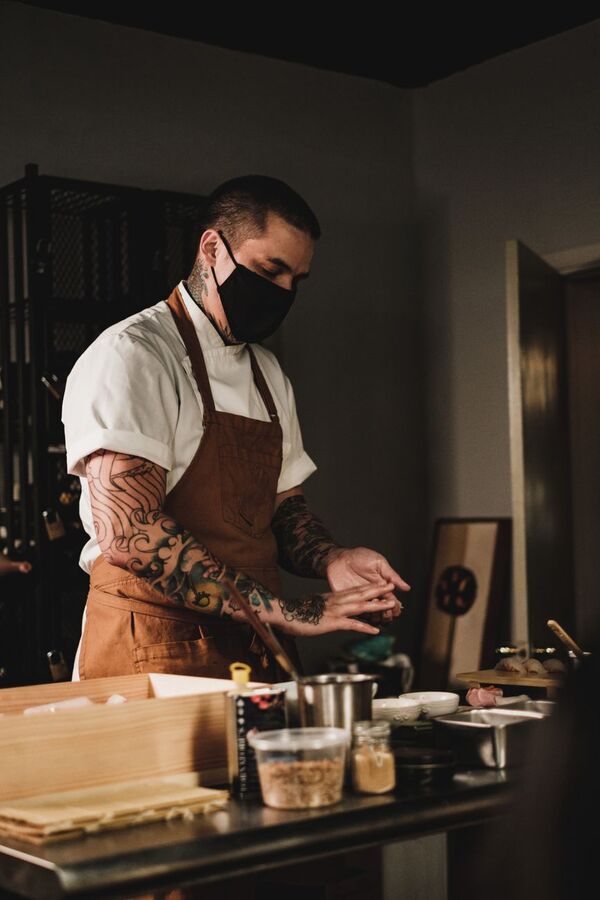
Professional cooking has long attracted people who value skill over appearances, and the brigade culture of the kitchen has its own rituals and badges of honour. A tattoo is a way of saying "this is my trade", the same way sailors once marked their voyages. Many chefs also mark milestones in ink: the first head chef job, opening a restaurant or surviving a brutal season.
Classic chef tattoo ideas
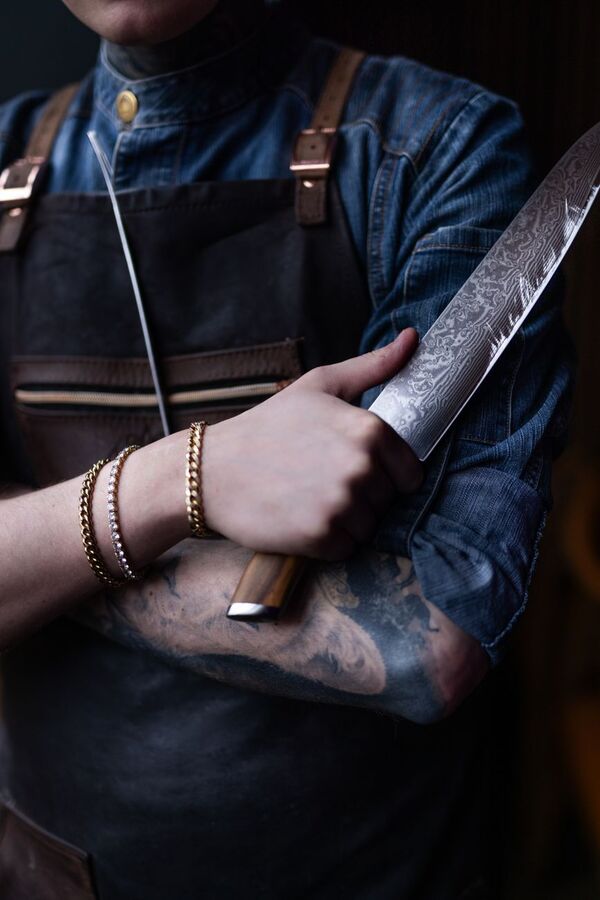
Crossed knives
The most recognisable chef tattoo. Two knives crossed, often with a banner, a name or the year someone started cooking. Some chefs tattoo their own favourite knife exactly, down to the handle.
The single knife
A chef's knife, a Japanese gyuto or a cleaver running down the forearm. The long blade suits the shape of the arm perfectly.
Whisk, spoon and fork
Pastry chefs often choose a whisk or a rolling pin; others go for a fork and spoon crossed like knives. Simple outlines read well from across the pass.
Herbs and vegetables
Rosemary, basil, thyme, chilli peppers, garlic, artichokes or a sliced lemon. Botanical ingredient tattoos are hugely popular and look elegant in fine line.
Butcher's diagram
A cow, pig or chicken divided into cuts, like an old butcher's chart. A favourite of chefs who love nose to tail cooking.
A family recipe
A grandmother's handwritten recipe card, or one line from it, is one of the most moving food tattoos there is. Scan the original and let the artist trace the handwriting.
The chef's hat
The tall white toque is a playful symbol of the profession, often paired with knives or a skull in traditional flash.
Ingredients from home
A chilli for Mexican roots, an olive branch for the Mediterranean, a ginkgo or yuzu for Japan. Food is identity, and these small designs carry a lot of it.
Fire and flames
Flames around a knife, a cast iron pan or a wood fired oven, for those who cook over live fire.
A sushi knife and fish
Koi, octopus or tuna in Japanese style, paired with a yanagiba knife. It suits sushi chefs and anyone who loves Japanese cuisine; read more in our guide to Japanese tattoo history.
The restaurant's name or opening date
A small tribute to the place that made you, or the kitchen you built yourself.
Styles that suit food tattoos
- American traditional: bold knives, banners and flames. Very readable and long lasting.
- Fine line botanical: herbs and vegetables with delicate detail.
- Black and grey realism: knives with real steel texture and wood grain.
- Illustrative: playful ingredients, butcher's charts and kitchen tools.
Not sure which look you like? See tattoo styles explained.
Best placements for cooks
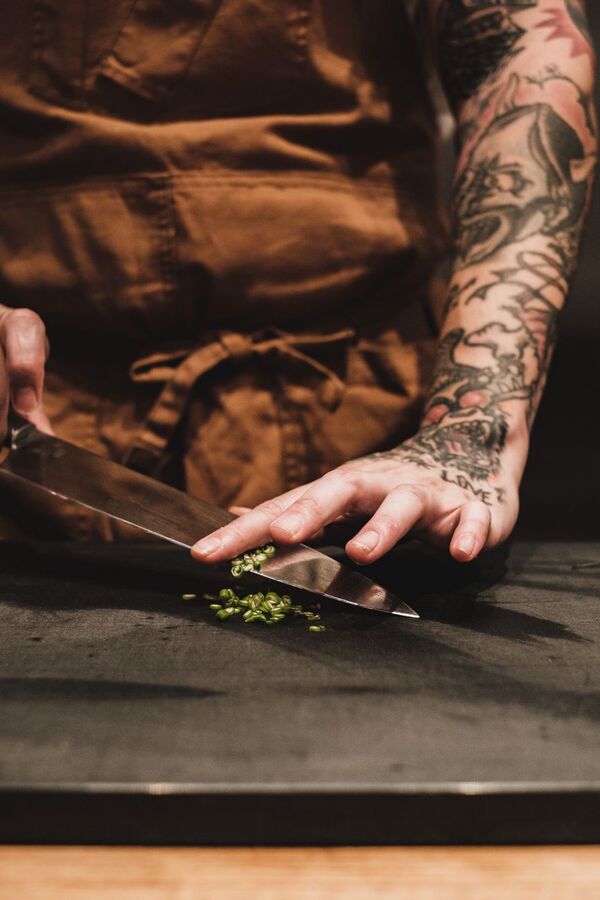
- Forearms: the classic kitchen placement, visible with rolled sleeves. Remember they will be in constant contact with heat, water and knives.
- Upper arms and shoulders: covered by chef's whites if you need them hidden.
- Calves: a good choice if you want large work that avoids the hands and forearms.
- Hands and fingers: popular, but they fade quickly in a kitchen because of constant washing and gloves. Expect touch ups.
Healing a new tattoo when you work in a kitchen
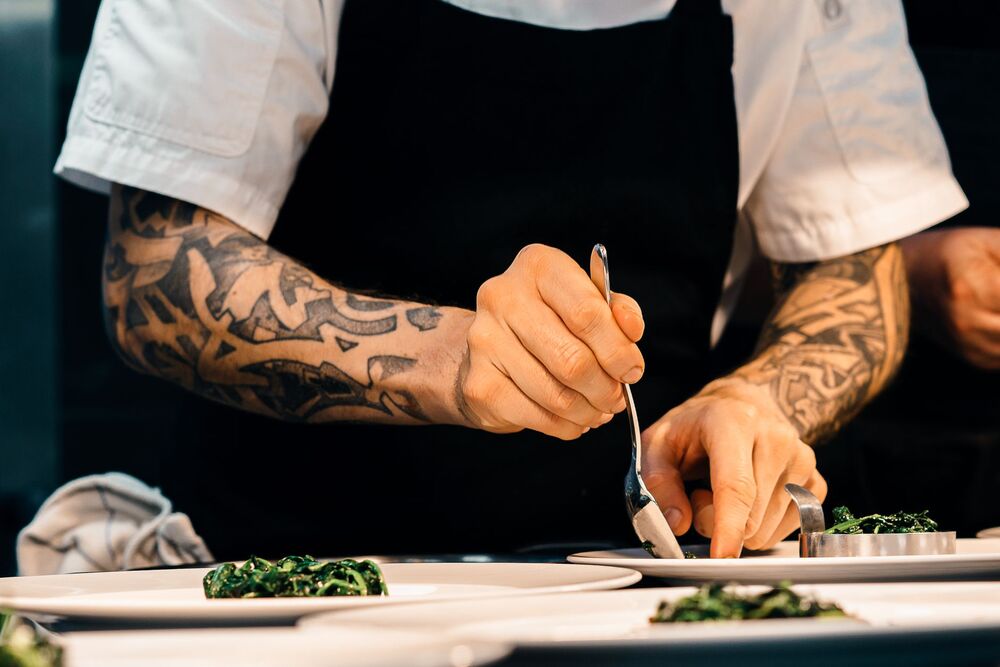
A fresh tattoo is an open wound for the first days, and kitchens are hot, wet and full of raw food. A few rules make all the difference:
- Book around your rota. Get tattooed before a couple of days off so the most tender phase happens at home.
- Keep it covered on shift. Food hygiene rules ask staff to cover any wound, and a fresh tattoo counts. Ask your artist about a breathable second skin film, and use a clean sleeve or dressing over it when needed.
- Avoid heat and steam. Heat lamps, ovens and steam can increase swelling and irritation. Keep the area away from the pass and the dishwasher where you can.
- No soaking. Plunging a forearm into a sink of hot water or ice is a bad idea until it heals.
- Wash your hands, not the tattoo. Constant hand washing is fine; just keep harsh detergents and sanitiser off the healing skin.
- Watch for infection. Kitchens carry plenty of bacteria. Learn the warning signs in infected tattoo signs, and know what normal crusting looks like in the tattoo scabbing phase.
The surface usually heals in two to four weeks. For a full timeline, read how long tattoos take to heal.
Frequently asked questions
Can chefs have tattoos?
Yes. Tattoos are widely accepted in professional kitchens. The only real rule is hygiene: fresh tattoos must be kept covered while they heal, like any other wound.
What does a crossed knives tattoo mean?
It is the chef's badge of trade: commitment to cooking, years of work and pride in the craft. With a date or a name, it often marks a milestone.
Are hand tattoos a good idea for cooks?
They look great, but constant washing, gloves and heat make them fade faster than on most other areas. Choose simple bold designs and budget for touch ups.
News Tattoos
Tattoo enthusiast and writer at News Tattoos. Passionate about tattoo art, culture, and the stories behind the ink. Covering the global tattoo community since 2022.
Get one tattoo story a day on Telegram
New guides, meanings and tattoo news, straight to your phone. Free, no spam.
Keep reading
 Tattoo News & Events
Japan Onsen Tattoo Rules: Can You Visit Hot Springs With Tattoos?
 Tattoo Artist Spotlights
How Much Should You Tip a Tattoo Artist? UK, US and Canada Etiquette
 Tattoo News & Events
Tattoo Ink Safety in the US: What MoCRA Changed and What the FDA Found
 Tattoo Artist Spotlights
How Much Do Tattoo Artists Earn? Salary in the UK and US