
Tattoo Placement Names: Every Spot on the Body Explained
Ditch, sternum, nape, shoulder cap or quarter sleeve? A head to toe guide to tattoo placement names, what each area suits, and how to describe exactly where you want your tattoo.
 Save
Save
Booking a tattoo gets much easier when you know what to call the spot you want. "Just above the elbow on the inside" becomes "inner bicep." "That bit behind the knee" is the "ditch." Artists use a whole vocabulary of tattoo placement names, and knowing them helps you describe exactly what you want.
Here is a head-to-toe guide to tattoo placement names, with what each area is good for and how it tends to feel.
Head, face and neck
- Behind the ear: the small area of skin just behind the ear. Discreet, popular for tiny symbols. Close to bone.
- Nape: the back of the neck at the hairline. Easy to hide with hair.
- Side neck: the side of the neck below the ear. Very visible.
- Throat: the front of the neck. One of the most visible and more sensitive placements.
- Temple: the side of the head beside the eye.
- Scalp: tattooed on a shaved head.
Face and neck tattoos carry extra considerations, which we cover in our guide to face tattoos.
Shoulders and upper body
- Shoulder cap: the rounded top of the shoulder, over the deltoid. A classic start for a sleeve.
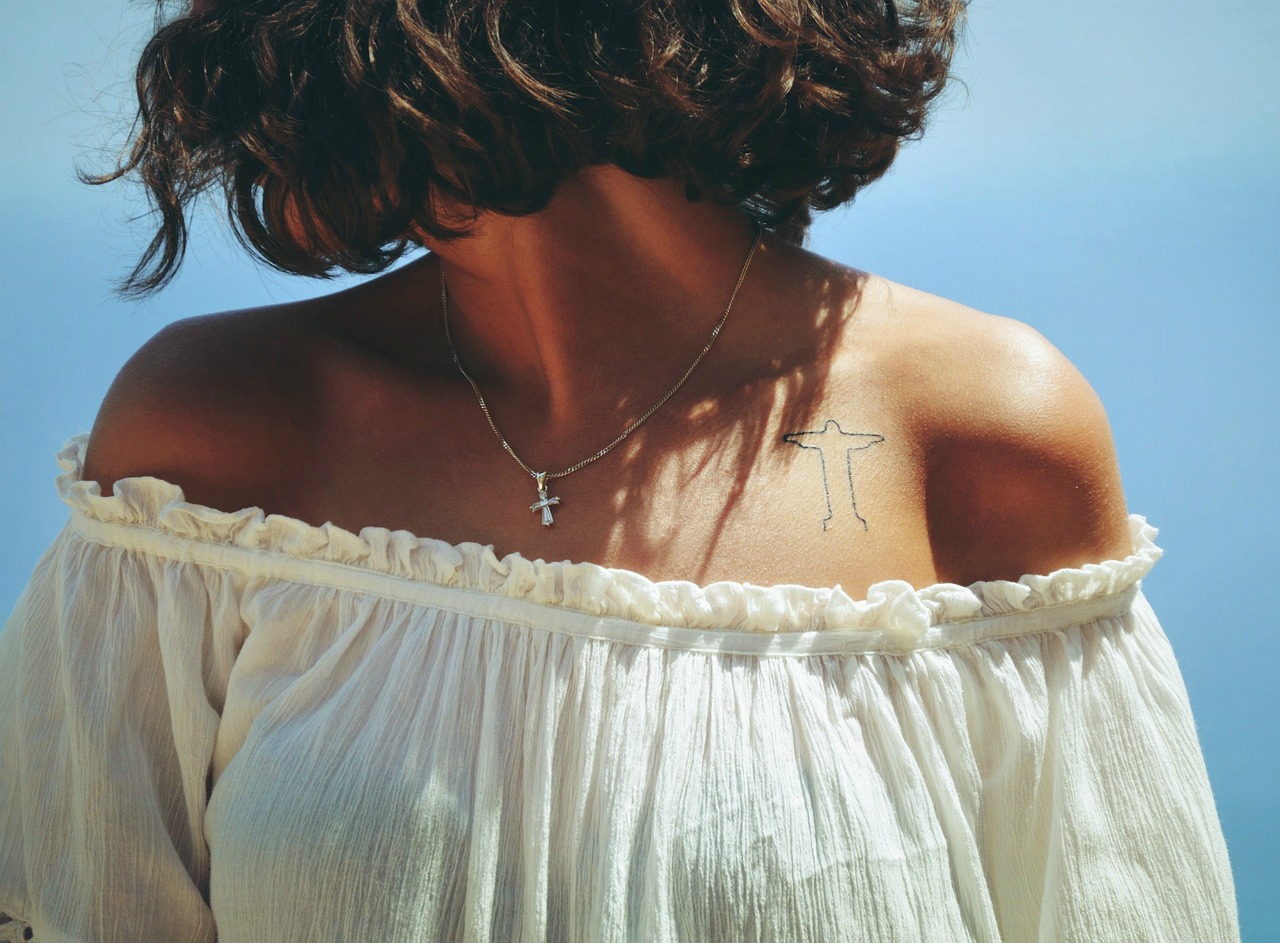
- Collarbone: along the clavicle. Popular for script and delicate designs. Bony and more sensitive.
- Chest piece: across one or both sides of the chest.
- Pec: one side of the chest, over the pectoral muscle.
- Sternum: the centre of the chest, over the breastbone. Popular for ornamental designs, but painful.
- Underboob: the area just beneath the breasts, often an ornamental or symmetrical design.
Arms
- Upper arm: the area between shoulder and elbow. The outer upper arm is one of the least painful places to get tattooed.
- Bicep: the front of the upper arm. The inner bicep faces the body and is softer and more sensitive.
- Tricep or back of the arm: good for vertical designs.
- Elbow: the point of the elbow, often decorated with spider webs or mandalas. Painful and slow to heal.
- Ditch: the inside crease of the elbow. Notoriously painful.
- Forearm: between elbow and wrist. The outer forearm is fairly comfortable, the inner forearm slightly more sensitive.
- Wrist: the inside or side of the wrist. Popular for small symbols and words.
- Half sleeve: a planned design covering shoulder to elbow, or elbow to wrist.
- Full sleeve: a design covering shoulder to wrist.
- Quarter sleeve: roughly the top half of the upper arm.
See our guide to arm tattoos for design ideas for each area.
Hands and fingers
- Back of the hand: very visible, fades faster than most areas.
- Knuckles: letters across the knuckles are a classic, such as "HOLD FAST."
- Side finger: the side of a finger, popular for tiny designs but prone to fading.
- Palm: rarely tattooed because ink fades quickly and it can be very painful.
Torso and back
- Ribs or side piece: along the ribcage. Elegant for long designs and script, but one of the more painful spots.
- Stomach: the abdomen. Can stretch with weight changes and pregnancy.
- Hip: the side of the hip bone, easy to hide.
- Shoulder blade: the flat area over the scapula. Good padding and easy to hide.
- Upper back: across the top of the back between the shoulders.
- Spine: a vertical design running down the centre of the back. Popular, but directly over bone.
- Lower back: the area above the tailbone.
- Back piece: a large design covering most or all of the back, a showcase in Japanese tattooing.
- Bodysuit: connected tattoos covering much of the body, traditional in Japanese work.
Legs and feet
- Thigh: the front or side of the upper leg. Good padding and lots of space. The inner thigh is more sensitive.
- Hip to thigh: a design flowing from the hip down the side of the thigh.
- Knee: the kneecap. Painful, and slow to heal because the skin bends.
- Back of the knee: sometimes also called the leg ditch. Very sensitive.
- Calf: the back of the lower leg. Muscular and relatively comfortable.
- Shin: the front of the lower leg, directly over bone.
- Leg sleeve: a design wrapping the whole leg.
- Ankle: around or beside the ankle bone. Popular but thin-skinned.
- Top of the foot: visible in sandals, painful and slower to heal.
How to use these names when you book
- Be specific: "a palm-sized design on the outer forearm, about halfway up" is far more useful than "on my arm."
- Send a photo of the spot with the design sketched or placed digitally.
- Mention future plans, such as a sleeve, so the artist can place the design to connect later.
- Ask about pain and healing for the area. Our guide to tattoo pain by body part explains what to expect.
If this is your first tattoo, read our first tattoo guide before you book.
News Tattoos
Tattoo enthusiast and writer at News Tattoos. Passionate about tattoo art, culture, and the stories behind the ink. Covering the global tattoo community since 2022.
Get one tattoo story a day on Telegram
New guides, meanings and tattoo news, straight to your phone. Free, no spam.
Keep reading
 Tattoo Inspiration & Ideas
Fine Line Tattoos After 10 Years: How They Really Age
Tattoo Inspiration & Ideas
Fine Line Tattoos After 10 Years: How They Really Age
 Tattoo Inspiration & Ideas
Couple Tattoo Ideas You Won't Regret
Tattoo Inspiration & Ideas
Couple Tattoo Ideas You Won't Regret
 Tattoo Inspiration & Ideas
First Tattoo Ideas for Men That Still Look Good in 20 Years
Tattoo Inspiration & Ideas
First Tattoo Ideas for Men That Still Look Good in 20 Years
 Tattoo Inspiration & Ideas
First Tattoo Ideas for Women: Small, Meaningful and Easy to Love
Tattoo Inspiration & Ideas
First Tattoo Ideas for Women: Small, Meaningful and Easy to Love