
First Tattoo Guide: Everything to Know Before Your First Tattoo
Age rules in the UK and US, choosing a design and artist, what happens in the chair, and aftercare. A step by step first tattoo guide so you walk in prepared and walk out happy.
 Save
Save
Your first tattoo is the one you will remember most clearly: the nerves in the waiting room, the buzz of the machine, the first look in the mirror. It is also the one where people make the most avoidable mistakes, because nobody tells you what the process actually involves until you are in the chair. These first tattoo tips walk you through it, step by step.
This guide walks through everything in order, from deciding on a design to the first weeks of healing, so you can walk in prepared and walk out happy.
1. Check you are old enough
In the UK, the Tattooing of Minors Act 1969 makes it illegal to tattoo anyone under 18, except for medical reasons. Parental consent does not change that, and reputable studios will ask for photo ID.
In the US, the rules are set state by state. You can get tattooed without parental consent from 18 everywhere, but some states allow younger teens with a parent's written consent or presence, while others ban tattooing minors completely. Check your state health department's rules, and expect studios to ask for ID either way.
Other countries set their own rules, so if you are travelling, check local law before booking.
We list the rules country by country in legal age for tattoos.
2. Take your time choosing the design
Rushed decisions are the single biggest theme in what people regret about their tattoos. A few ways to avoid it:
- Live with the idea. If you still love a design after three months of looking at it, that is a very good sign.
- Save images, but do not copy another person's tattoo. Bring references for the style and feeling you like, and let an artist draw something for you.
- Avoid names of partners for a first tattoo. Family, places, symbols and personal meaning age better.
- Try it on first. Draw it on with a skin-safe marker, or wear a temporary version for a week. Our guide to temporary tattoos explains your options.
- Check any words letter by letter, and have anything in another language checked by a fluent speaker.
3. Pick a sensible placement
For a first tattoo, many artists suggest somewhere forgiving on pain, easy to cover and easy to heal, such as the outer upper arm, forearm, calf or thigh. Ribs, feet, hands, spine and the inner wrist tend to be more sensitive, and hands and fingers fade fastest.
Think about visibility too: whether you want to see it yourself, and whether you want it on show at work. Our guides to tattoo pain by body part and tattoos and jobs cover both.
4. Do not go too small
Tiny, very fine tattoos look beautiful on day one, but ink naturally spreads a little under the skin over the years, and small details and letters can blur together. Let your artist set the minimum size for your design. If they suggest going a bit bigger, it is advice, not upselling.
5. Choose the artist, not just the studio
- Find someone whose style matches yours. Fine line, traditional, realism and lettering are different skills.
- Look for healed work in their portfolio, not just freshly finished photos.
- Check hygiene and licensing. Single-use needles opened in front of you, fresh gloves and covered surfaces are non-negotiable. In the UK, tattooists and premises must be registered with the local council.
- Read reviews and trust your instincts. If anything feels off, leave.
Our list of 15 tattoo red flags tells you exactly what to watch for.
Our guide on how to find a good tattoo artist walks you through it, and explains how to avoid a tattoo blowout.
6. Understand the cost
Most studios have a minimum charge, and small first tattoos often land at or near it. Larger or detailed pieces are usually charged by the hour. Expect to pay a deposit when booking, which normally comes off the final price, and in the US budget for a tip. Our guide to how much a tattoo costs breaks it all down. Never choose an artist on price alone.
7. The day before and the day of
- Sleep well and eat a proper meal an hour or two beforehand. Low blood sugar is the main reason people feel faint.
- Do not drink alcohol the night before or on the day. It thins the blood and makes the process harder.
- Ask your artist before taking painkillers, as some, such as aspirin and ibuprofen, can increase bleeding.
- Wear comfortable, loose clothing that gives easy access to the area and will not rub afterwards. Dark clothes are best, as ink can transfer.
- Bring ID, water and a snack, plus headphones if you like a distraction.
- Do not come in sunburnt, unwell or with broken skin where the tattoo will go.
Here is why alcohol before a tattoo is a bad idea.
8. What actually happens in the chair
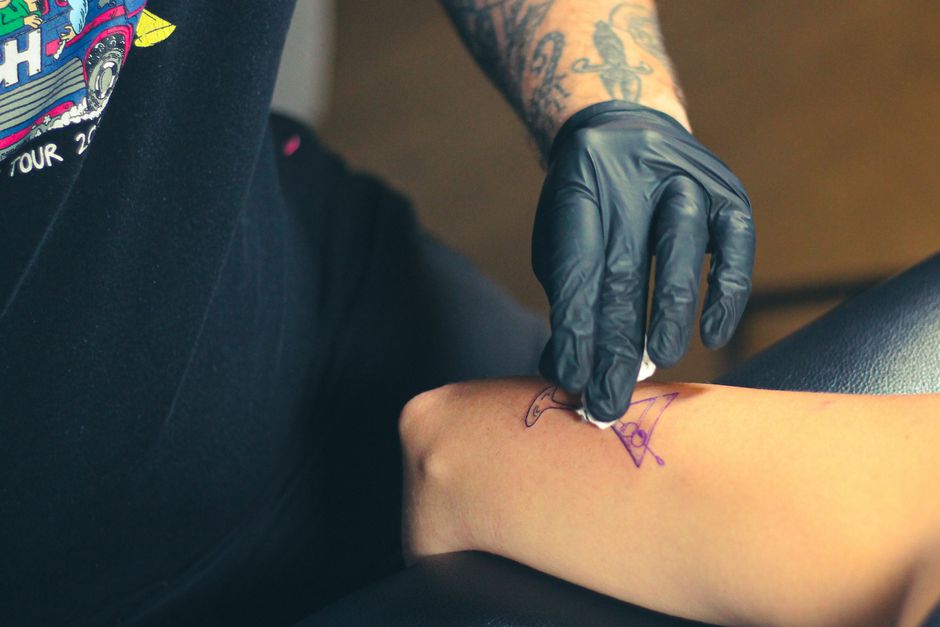
You will usually fill in a consent form, then the artist prepares the design and places a stencil on your skin. This is your last chance to check the size and position, so look carefully in the mirror and ask for changes if needed. A good artist will happily move it.
The area is cleaned, and then tattooing starts. Most people describe the sensation as a hot scratch or a persistent sting. The largest study on tattoo pain found an average of around 4 out of 10 during tattooing, dropping sharply once it stops. It is completely fine to ask for a break. Breathe steadily and try not to tense up.
Afterwards, the artist cleans the tattoo and covers it with a wrap or a clear protective film, and gives you aftercare instructions.
9. Aftercare for the first few weeks
- Follow your artist's instructions about when to remove the covering.
- Wash gently with clean hands, lukewarm water and a mild, fragrance-free soap, then pat dry with a clean paper towel.
- Moisturise lightly with a thin layer of an unscented aftercare product. Too much can suffocate the skin.
- Do not pick or scratch flakes or scabs, even when it itches.
- Avoid swimming, baths, saunas and hot tubs until healed.
- Keep it out of the sun, then use sunscreen once it has fully healed.
Peeling, itching and a slightly cloudy look are normal parts of healing. Increasing redness, heat, swelling, pus or fever are not: see a doctor. Our tattoo healing timeline explains each stage, and our guide to tattoo aftercare products covers what to buy.
For the first nights, read how to sleep with a new tattoo, and learn what the tattoo scabbing phase looks like.
10. A few things people do not expect
Giving blood. In the UK, NHS Blood and Transplant asks you to wait four months after a tattoo before donating. In the US, the American Red Cross does not require a wait if the tattoo was done at a state-regulated facility, but asks for three months if it was not.
Touch ups. Many artists offer a free touch up within a few months if a small area heals patchy, as long as you followed aftercare. Ask before you book.
The second tattoo. Almost everyone warns you that one leads to another. Plan your first placement so it does not block space you might want for a bigger piece later.
Take your time, choose the right artist, and look after it well. A first tattoo done this way is one you will be glad you got for the rest of your life.
Sources: Tattooing of Minors Act 1969; NHS Blood and Transplant; American Red Cross.
Tattoos can also raise questions later, from donating blood with tattoos to having an MRI with tattoos.
News Tattoos
Tattoo enthusiast and writer at News Tattoos. Passionate about tattoo art, culture, and the stories behind the ink. Covering the global tattoo community since 2022.
Get one tattoo story a day on Telegram
New guides, meanings and tattoo news, straight to your phone. Free, no spam.
Keep reading
 Tattoo Aftercare & Tips
How Much Does a Tattoo Cost? An Honest Guide to Tattoo Prices
Tattoo Aftercare & Tips
How Much Does a Tattoo Cost? An Honest Guide to Tattoo Prices
 Tattoo Aftercare & Tips
Tattoo Pain by Body Part: What the Evidence Actually Says
Tattoo Aftercare & Tips
Tattoo Pain by Body Part: What the Evidence Actually Says
 Tattoo Aftercare & Tips
How to Sleep With a New Tattoo: Positions and Bedding Tips
Tattoo Aftercare & Tips
How to Sleep With a New Tattoo: Positions and Bedding Tips
 Tattoo Inspiration & Ideas
Fine Line Tattoos After 10 Years: How They Really Age
Tattoo Inspiration & Ideas
Fine Line Tattoos After 10 Years: How They Really Age