Good Luck Tattoos: Symbols, Meanings and Where They Come From
Horseshoes, four-leaf clovers, lucky sevens, the ankh and the evil eye. The most popular good luck tattoos, the stories behind each symbol, and how to choose one that means something to you.
 Save
Save
People have carried good luck charms for thousands of years: coins, stones, horseshoes, dried clover. A tattoo is the one charm you can never lose. Good luck tattoos remain some of the most requested small designs, and many of them come with surprisingly old stories.
Here are the most popular good luck tattoos, where each symbol comes from, and how to choose one that means something to you.
Horseshoe
One of the best known luck symbols in Western culture. Explanations for it vary. One is that early horseshoes were made of iron, a metal long believed to drive away evil spirits. Another is a medieval English legend in which Saint Dunstan, a blacksmith, nailed a horseshoe to the Devil's hoof and only removed it once the Devil promised never to enter a home with a horseshoe over the door.
People still argue about which way up it should hang. Points up is usually said to hold the luck in, points down to pour it over whoever passes beneath. For a tattoo, either works. Horseshoes are especially popular with people connected to horses, farming or racing.
Four-leaf clover
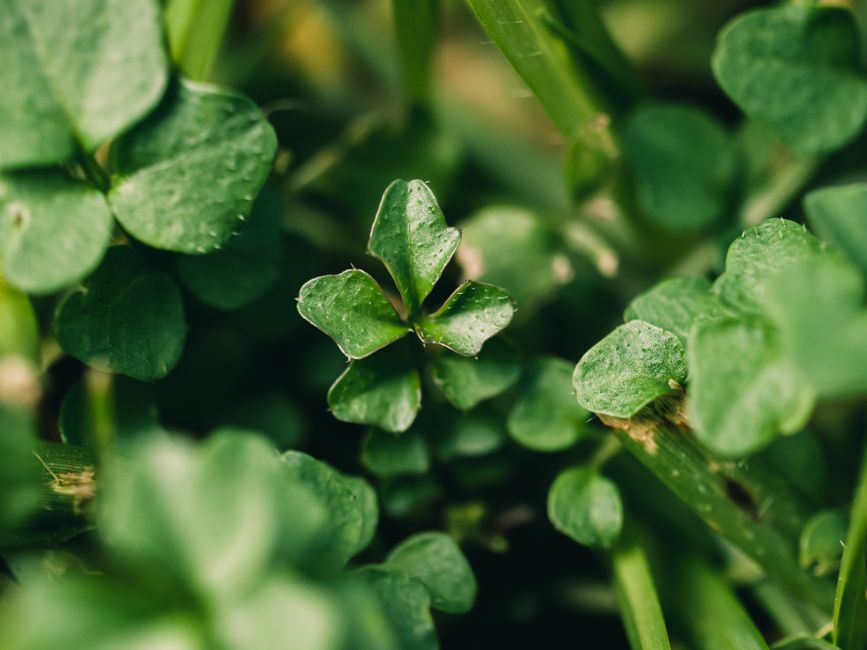
Most clover has three leaves, and four-leaf clovers occur only as a rare natural variation, which is exactly why finding one came to feel lucky. In Irish folklore the clover and shamrock have deep roots, and the four leaves are often said to stand for faith, hope, love and luck.
A small green clover is a classic choice for St Patrick's Day fans and people with Irish heritage. It works well in fine line on the wrist, ankle or behind the ear.
Lucky number 7
Seven turns up everywhere in human culture: seven days of the week, seven wonders of the ancient world, and a long association with luck in gambling and games. As a tattoo it is simple and personal, and it can double as a birthday, jersey number or anniversary. It is also the friendship tattoo that members of BTS revealed in 2022, which we cover in our guide to BTS tattoos.
Ankh
The ankh is an ancient Egyptian hieroglyph that represented the word for "life," and it was used as a symbol of life itself. Egyptian gods are often shown holding it. As a tattoo it stands for life, vitality and protection rather than luck in the gambling sense, and it has become a popular symbol of spirituality and African heritage.
Evil eye and hamsa
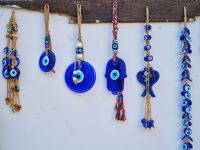
Across the Mediterranean and Middle East, luck is often about protection: keeping away the harm caused by envy. The blue nazar eye and the hamsa hand are two of the most popular protective tattoos in the world. We explain their history in detail in our guide to evil eye tattoo meaning.
Swallow and nautical star
These come from sailor tattoo traditions. Swallows are famously linked with sailors returning home safely, and the nautical star, a symbol of navigation, became a charm for finding your way. Both are classics of American traditional tattooing and age extremely well with bold lines and solid colour.
Dice and playing cards
A pair of dice showing a winning roll, an ace, or a lucky hand of cards is a staple of traditional tattooing. For some people it is about taking risks in life, for others about a love of games, and for many a reminder that luck can change.
Maneki-neko
The Japanese beckoning cat with a raised paw is a symbol of good fortune often displayed in shops and restaurants to welcome customers and prosperity. It makes a playful, colourful tattoo, and can be drawn in traditional Japanese or cute kawaii style.
Other popular choices
- Ladybird: considered lucky in many European folk traditions.
- Elephant with a raised trunk: associated with good fortune in several cultures.
- Shooting star: linked with making wishes.
- Crossed fingers: a playful modern take on wishing someone luck.
- Your zodiac sign or birth flower: a personal symbol of fortune and identity.
The number 13 is a lucky charm in tattooing; find out why in Friday the 13th tattoos.
Choosing your good luck tattoo
Pick the story, not just the shape. A four-leaf clover you actually found as a child, your grandfather's lucky number or a horseshoe for a horse you loved will mean far more than a symbol chosen from a list.
Respect cultural symbols. Symbols such as the ankh, hamsa and maneki-neko belong to living cultures and religions. Learn what they mean before you wear them.
Mind the size. Many luck tattoos are tiny, and very small, very fine designs can blur over time. Let your artist advise on the minimum size.
Small symbolic tattoos usually fall at or near a studio's minimum charge, as explained in our guide to how much a tattoo costs, and our list of tattoo red flags will help you pick a studio.
Background on the horseshoe tradition from Encyclopaedia Britannica and on the ankh from the Ankh article and its cited sources.
News Tattoos
Tattoo enthusiast and writer at News Tattoos. Passionate about tattoo art, culture, and the stories behind the ink. Covering the global tattoo community since 2022.
Get one tattoo story a day on Telegram
New guides, meanings and tattoo news, straight to your phone. Free, no spam.
Keep reading
 Tattoo Culture & History
Sailor Tattoo Meanings: Swallows, Anchors, Nautical Stars and Hold Fast
Tattoo Culture & History
Sailor Tattoo Meanings: Swallows, Anchors, Nautical Stars and Hold Fast
 Tattoo Inspiration & Ideas
Evil Eye Tattoo Meaning: History, Designs and Placement Ideas
Tattoo Inspiration & Ideas
Evil Eye Tattoo Meaning: History, Designs and Placement Ideas
 Tattoo Inspiration & Ideas
Tree of Life Tattoo Meaning: Symbolism Across Cultures and Design Ideas
Tattoo Inspiration & Ideas
Tree of Life Tattoo Meaning: Symbolism Across Cultures and Design Ideas
 Tattoo Inspiration & Ideas
Sibling Tattoo Ideas for 2, 3 or 4: Brothers, Sisters and More
Tattoo Inspiration & Ideas
Sibling Tattoo Ideas for 2, 3 or 4: Brothers, Sisters and More