Norse Tattoo Meanings: Viking Symbols and the Ones to Research First
Yggdrasil, Thor's hammer, Odin's ravens and runes. The meanings behind popular Norse and Viking tattoos, why the vegvísir is not from the Viking Age, and the symbols that have been appropriated by hate groups.
 Save
Norse and Viking tattoos are more popular than ever, helped along by TV series, video games and a renewed interest in Scandinavian mythology. Runes, ravens, wolves, Thor's hammer and the World Tree all make striking designs. But some Norse symbols come with a complicated modern history, and a few are even younger than most people think. It is worth knowing which Norse tattoos to avoid, or at least research carefully, before you book. Here are the Viking tattoo meanings behind each symbol.
Here are the meanings behind popular Norse tattoos, and the symbols to research carefully before you get inked.
Did Vikings have tattoos?
There is little archaeological evidence, because skin rarely survives. The most famous written account comes from the 10th century Arab traveller Ahmad ibn Fadlan, who described meeting the Rus, Scandinavian traders on the Volga, and wrote that they were marked from their fingernails to their necks with dark green designs. Historians debate whether he meant tattoos, body paint or something else. Modern Viking tattoos are best thought of as inspired by Norse art and myth rather than copies of Viking Age tattoos.
Popular Norse tattoo meanings
Yggdrasil, the World Tree
In Norse mythology, Yggdrasil is the vast tree that connects the nine worlds. As a tattoo, it represents connection, life, fate and the cycle of existence. Compare our guide to tree of life tattoos.
Mjölnir, Thor's hammer
Thor's hammer was worn as a pendant in the Viking Age, and many examples survive. It symbolises protection, strength and blessing.
Huginn and Muninn, Odin's ravens
Odin's two ravens, whose names are usually translated as "thought" and "memory", fly across the world and bring him news. Raven tattoos represent wisdom, insight and Odin himself.
Wolves
Wolves appear throughout Norse myth, from Odin's wolves Geri and Freki to Fenrir, the monstrous wolf who breaks free at Ragnarök. Wolf tattoos can represent loyalty, family, strength or wildness.
Runes
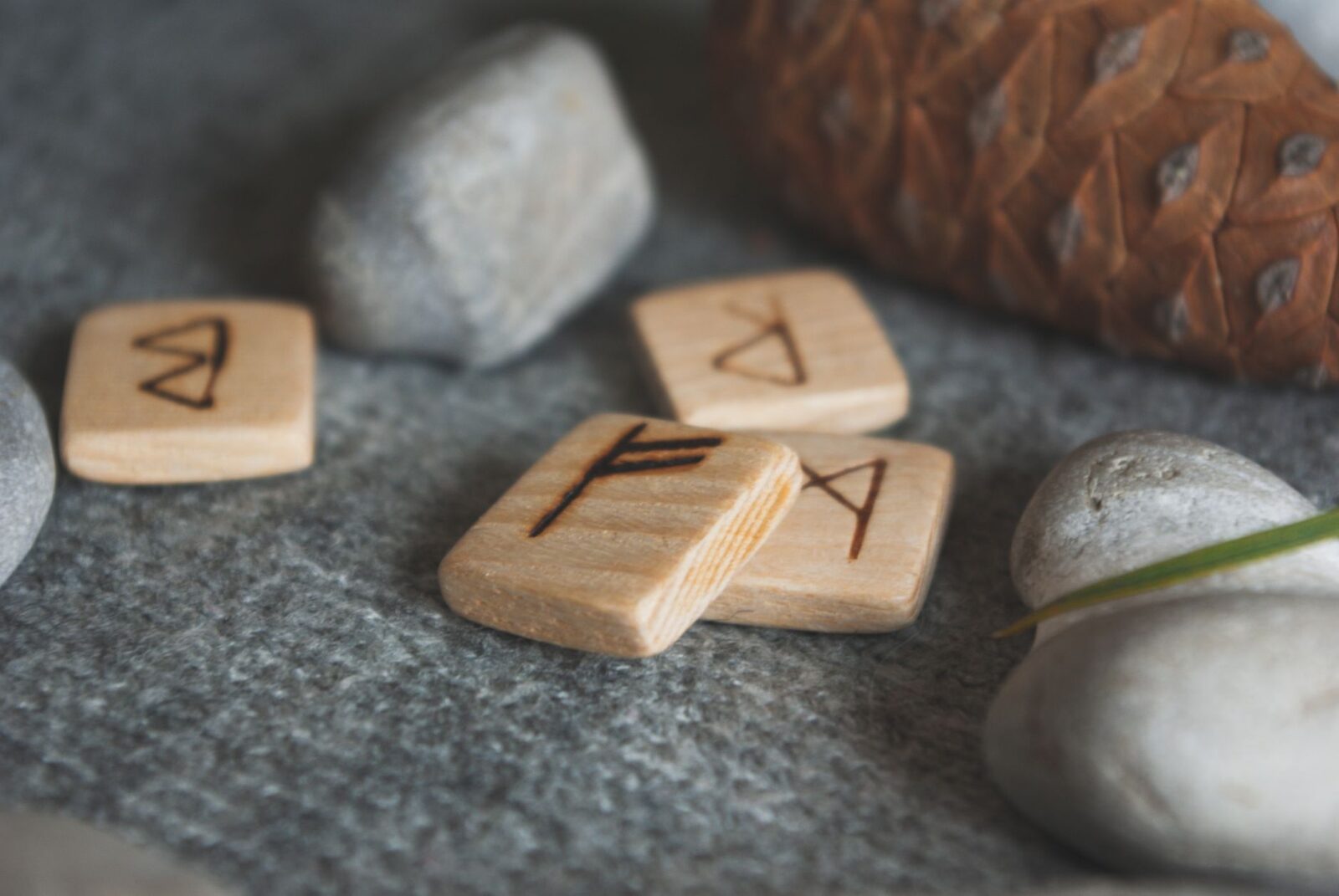
Runes were the letters used to write early Germanic languages. The Elder Futhark alphabet is the most popular for tattoos. Runes can spell out a name or word, or be chosen for the meaning traditionally associated with each letter. Always check spellings with a reliable source, as runic "translations" online are often wrong.
Symbols that are not what they seem
Vegvísir, the "Viking compass"
The vegvísir is often called a Viking compass, but there is no evidence it existed in the Viking Age. It first appears in the Huld Manuscript, compiled in Iceland in 1860, where it is described as a symbol to help the bearer never lose their way in storms or bad weather. It is a genuine piece of Icelandic folk magic, just from the 19th century rather than the age of the Vikings. The singer Björk has a vegvísir tattoo.
Norse symbols to research carefully
Some Norse and runic symbols have been appropriated by white supremacist and neo-Nazi movements. The Anti-Defamation League (ADL), which tracks hate symbols, stresses that these symbols also have legitimate, non-racist uses, particularly among heathens and pagans, and must be judged in context. But if you get one, some people may misread it, so it is worth knowing their history.
- The valknut: three interlocking triangles found on Viking Age picture stones such as Stora Hammars I. Its original meaning is uncertain, though it is often linked with Odin and death in battle. The ADL notes it has been appropriated by white supremacists, while non-racist pagans also use it.
- The Othala rune: a letter of the runic alphabet adopted by the Nazis and later by white supremacist groups. It appears in ordinary runic writing, but on its own, particularly with added "wings" or serifs, it is strongly associated with extremism.
- The Wolfsangel: often described as a rune, it is actually based on a medieval wolf trap and was later used in heraldry and by Nazi units. It still appears in some German town coats of arms.
Combining any of these with Nazi imagery, numbers such as 14 or 88, or slogans makes their meaning unmistakable. Reputable artists may refuse to tattoo designs that read as hate symbols.
Tips for a Norse tattoo
- Research the history of every symbol in your design.
- Choose an artist experienced in Norse knotwork, blackwork or dotwork. See our guide to tattoo styles explained.
- Be cautious with runic text. Get spellings checked by someone who knows Old Norse or runology.
- Think about scale. Knotwork and runes need space to stay readable. Read how fine line tattoos age.
For other traditions, explore our tattoo history timeline and our guide to good luck tattoos.
Sources: Wikipedia articles on the valknut and vegvísir, and the ADL hate symbols entries for the valknot, Othala rune and Wolfsangel.
News Tattoos
Tattoo enthusiast and writer at News Tattoos. Passionate about tattoo art, culture, and the stories behind the ink. Covering the global tattoo community since 2022.
Get one tattoo story a day on Telegram
New guides, meanings and tattoo news, straight to your phone. Free, no spam.
Keep reading
 Tattoo Culture & History
Day of the Dead Tattoo Meaning: Sugar Skulls, La Catrina and Marigolds
 Tattoo Culture & History
Tā Moko: The Meaning of Māori Tattoos and How to Respect Them
 Tattoo Culture & History
Sailor Tattoo Meanings: Swallows, Anchors, Nautical Stars and Hold Fast
 Tattoo Artist Spotlights
Stories In Ink Ottawa Celebrates Black Creatives