
Praying Hands Tattoo Meaning: The Dürer Drawing, Designs and Placement
Most praying hands tattoos trace back to a drawing Albrecht Dürer made around 1508. What the design means, the popular legend that is not true, and the designs and placements that work best.
 Save
Save
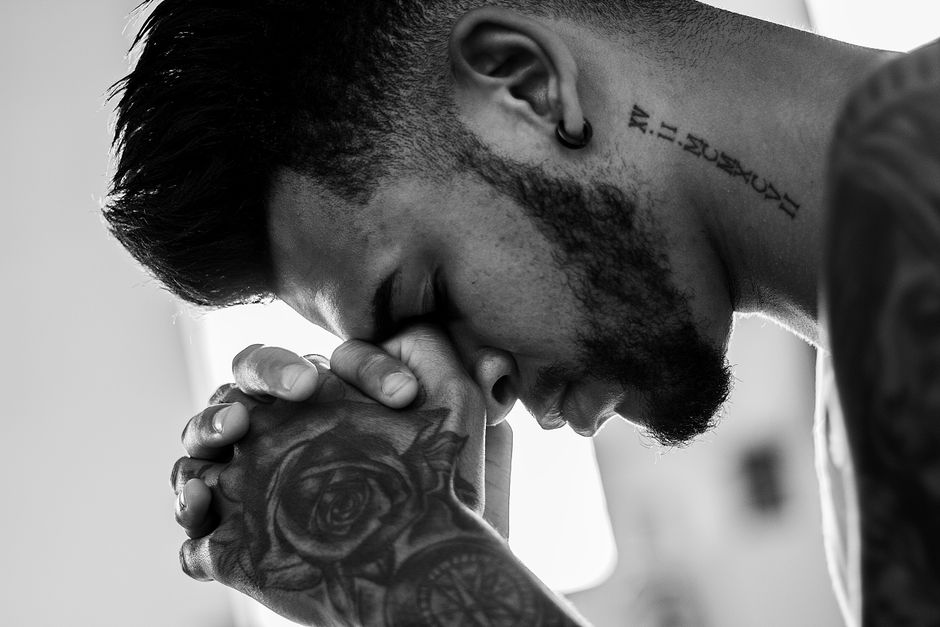
A praying hands tattoo is one of the most enduring religious designs in the world. The design is instantly recognisable, deeply personal, and far older than tattooing as most people know it: many versions trace straight back to a drawing made more than 500 years ago.
Here is where the image comes from, what a praying hands tattoo can mean, and the design and placement choices that make it work.
Where the image comes from: Albrecht Dürer
The praying hands most people picture are based on a drawing by the German Renaissance artist Albrecht Dürer, made around 1508. Drawn in ink with white highlights on blue paper he prepared himself, it shows a pair of hands pressed together in prayer, with the sleeves of a robe at the wrists. The original is held by the Albertina museum in Vienna.
Dürer made it as a study for an altarpiece commissioned for a church in Frankfurt, known as the Heller Altarpiece, where the hands belong to an apostle kneeling in prayer.
The brother legend
You may have heard a moving story that the hands belonged to Dürer's brother, who supposedly gave up his own artistic ambitions and worked as a labourer to pay for Dürer's training, ruining his hands in the process. It is a beautiful tale and it is often told alongside praying hands tattoos. There is, however, no historical evidence for it. The drawing only became widely known in the 19th century, and the legend appears to have grown up long after Dürer's lifetime.
It is worth knowing, because the true story is meaningful in its own right: a study of devotion, drawn with such care that it became one of the most reproduced images in Western art.
What a praying hands tattoo means
- Faith and devotion: the most common meaning, a visible statement of belief and a reminder to pray.
- Remembrance: praying hands are one of the most popular memorial tattoos, often with a name, dates or a rosary, honouring someone who has died.
- Gratitude: thankfulness for a recovery, a child, or getting through a hard time.
- Hope and strength: asking for guidance or protection, sometimes for someone else who is struggling.
- Humility and forgiveness: an acknowledgement of past mistakes and a wish to do better. In some communities the design has long been associated with regret and asking for forgiveness, and it has deep roots in Chicano tattooing and black and grey work.
The meaning is personal, so the details you add matter more than the hands themselves.
Popular praying hands tattoo designs
Dürer inspired black and grey
A detailed, realistic rendering of the classic study, with soft shading and visible sleeve cuffs. It suits the forearm, upper arm, chest or back, and needs enough size for the fine detail to hold up over time.
Praying hands with a rosary
Rosary beads draped through the fingers, often with the cross hanging below. One of the most requested combinations, and it can extend down the arm or wrap the wrist.
With a cross or light
A cross behind the hands, clouds, or rays of light breaking through above, symbolising faith and hope.
Memorial designs
A banner or scroll with a name and dates, a portrait above the hands, or a loved one's handwriting. Doves, roses and angel wings are common additions.
More ideas in our memorial tattoo ideas.
With scripture or lettering
Short phrases such as "Faith," "Blessed" or "Only God can judge me," or a Bible verse reference. For lettering advice, see our guide to blessed tattoos.
Wondering what scripture says about ink itself? Read tattoos in the Bible: what Leviticus 19:28 really says.
Minimalist and fine line
A simple outline of praying hands is a popular small tattoo on the wrist, finger or behind the ear. Keep in mind that very small, very fine designs can blur with age.
Where to place a praying hands tattoo
- Forearm: the most popular spot, visible and roomy enough for detail.
- Upper arm and shoulder: good for a larger realistic piece, or part of a religious sleeve. See our guide to arm tattoos for men.
- Chest: close to the heart, and a traditional placement for memorial and devotional work.
- Back: the upper back or between the shoulder blades suits a large piece with a cross, clouds or lettering.
- Hand or wrist: a small outline works, but hands fade fastest and need touch ups.
Some placements are much more sensitive than others. Our guide to tattoo pain by body part explains what to expect.
Choosing an artist
Hands are notoriously hard to draw, and realistic praying hands leave nowhere for weak technique to hide. Look for an artist whose healed black and grey or realism work you have seen, particularly anatomy. If you want a faithful Dürer style piece, bring a good reproduction of the original drawing as reference.
Detailed pieces are usually priced hourly. Our guide to how much a tattoo costs explains how that works, and our list of tattoo red flags will help you choose a studio.
Background on the drawing from the Praying Hands (Dürer) article and its cited sources.
News Tattoos
Tattoo enthusiast and writer at News Tattoos. Passionate about tattoo art, culture, and the stories behind the ink. Covering the global tattoo community since 2022.
Get one tattoo story a day on Telegram
New guides, meanings and tattoo news, straight to your phone. Free, no spam.
Keep reading
 Tattoo Culture & History
Tattoos in the Bible: What Leviticus 19:28 Really Says
Tattoo Culture & History
Tattoos in the Bible: What Leviticus 19:28 Really Says
 Celebrity Tattoos
Lewis Hamilton Tattoos: Still I Rise, Faith and Family Explained
Celebrity Tattoos
Lewis Hamilton Tattoos: Still I Rise, Faith and Family Explained
 Celebrity Tattoos
Lionel Messi Tattoos: What Each One Means
Celebrity Tattoos
Lionel Messi Tattoos: What Each One Means
 Tattoo Culture & History
Auschwitz Tattoos: The History of the Numbers and the Descendants Who Carry Them
Tattoo Culture & History
Auschwitz Tattoos: The History of the Numbers and the Descendants Who Carry Them