
Tattoos in the Bible: What Leviticus 19:28 Really Says
Does the Bible forbid tattoos? What Leviticus 19:28 says in context, how Jewish and Christian traditions interpret it, why believers disagree, and the Christians who have tattooed crosses for centuries.
 Save
Save
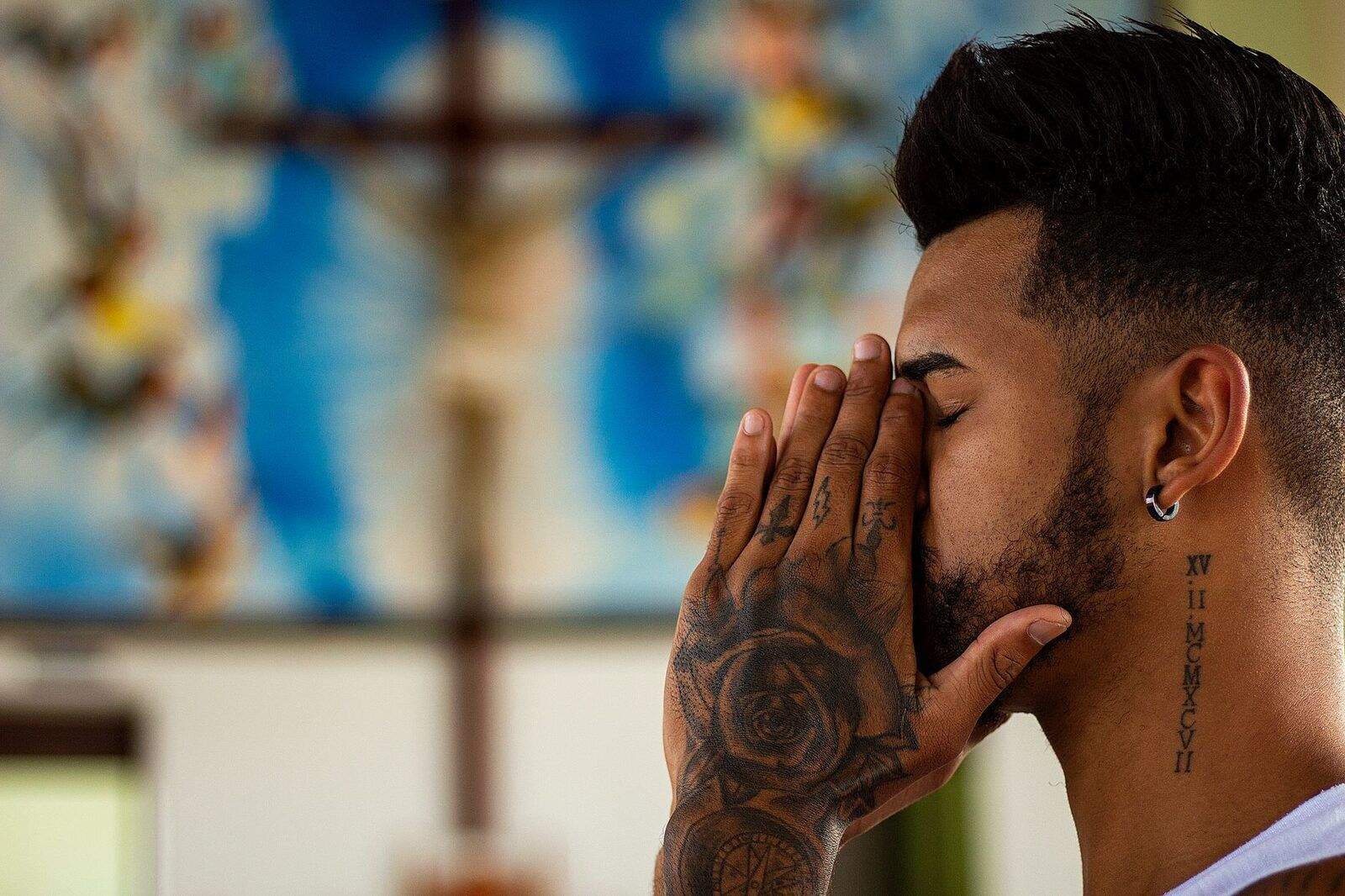
"Does the Bible say tattoos are a sin?" is one of the most searched questions about tattoos in the Bible. Many Christians have heard that a single verse forbids tattoos, while others wear crosses, scripture and praying hands with pride. The truth is more nuanced than either side sometimes suggests.
Here is what the Bible actually says, how Jewish and Christian traditions have interpreted it, and why believers still disagree.
The verse: Leviticus 19:28
The Bible mentions marking the skin directly in only one verse, in the Old Testament book of Leviticus. The King James Version reads:
"Ye shall not make any cuttings in your flesh for the dead, nor print any marks upon you: I am the LORD."
Modern translations such as the New International Version render the second part as "do not put tattoo marks on yourselves."
What the verse meant in context
Leviticus 19 is part of the Holiness Code, a long list of laws given to ancient Israel. Many scholars read verse 28 alongside the verses around it, which prohibit practices associated with the religions of neighbouring peoples, including certain mourning rituals.
- The first half of the verse specifically mentions cutting the flesh "for the dead," a mourning practice in the ancient Near East.
- Many interpreters therefore see the ban on marks as connected to pagan mourning and religious rites, rather than to decoration in general.
- Others argue the verse is a broader instruction not to permanently mark the body, whatever the reason.
The same chapter also contains laws that most Christians do not follow today, such as rules against mixing two kinds of fabric in clothing (Leviticus 19:19), which is central to the debate below.
Judaism and tattoos
In Jewish tradition, the verse has generally been understood as a prohibition on tattooing, and Orthodox Judaism maintains that prohibition. Views are more varied in Conservative and Reform communities. A widely repeated belief that Jews with tattoos cannot be buried in a Jewish cemetery is a myth that many rabbis have rejected, although individual cemeteries may have their own policies.
The subject carries particular weight because of the numbers forcibly tattooed on prisoners at Auschwitz. Our article on the legacy of Auschwitz tattoos explores how some descendants of survivors have chosen to reproduce those numbers in remembrance.
Christianity and tattoos
The Old Covenant argument
Many Christians believe that the ceremonial and ritual laws of Leviticus were given to ancient Israel and are not binding on Christians under the New Covenant. On this view, Leviticus 19:28 does not apply to believers today, in the same way that dietary and fabric laws are not followed.
The "body as a temple" argument
Christians who discourage tattoos often point instead to the New Testament. In 1 Corinthians 6:19 and 20, Paul describes the body as a temple of the Holy Spirit and urges believers to honour God with their bodies. Some read this as a reason to avoid permanent marks. Others argue that a meaningful tattoo can itself honour God.
Denominations differ
There is no single Christian position. Many Protestant and Catholic Christians consider tattoos a matter of personal conscience. The Church of Jesus Christ of Latter-day Saints discourages them. In contrast, some ancient Christian communities have a long tradition of religious tattooing.
Christian tattoo traditions
- Coptic Christians in Egypt have traditionally tattooed a small cross on the inner wrist as a sign of faith and identity.
- Pilgrims to Jerusalem have been tattooed with religious designs for centuries as a record of their pilgrimage.
Today, crosses, rosaries, Bible verses and praying hands tattoos are among the most popular religious designs in the world. Footballer Lionel Messi and Formula 1 driver Lewis Hamilton both wear faith inspired tattoos, as covered in our guides to Messi's tattoos and Hamilton's tattoos.
Islam and tattoos
The Quran does not mention tattooing. Many Sunni scholars consider permanent tattoos forbidden based on hadith, while some Shia authorities have said there is no clear prohibition. Temporary body art such as henna is widely accepted. Read more in our guide to henna.
So, is getting a tattoo a sin?
It depends on your tradition and how you read scripture. Believers who are unsure often find it helpful to speak with their minister, priest or rabbi, reflect on why they want the tattoo, and choose a design that fits their values.
Scripture quoted from the King James Version (public domain). Background on religious views drawn from the Wikipedia article on religious perspectives on tattooing and its cited sources.
News Tattoos
Tattoo enthusiast and writer at News Tattoos. Passionate about tattoo art, culture, and the stories behind the ink. Covering the global tattoo community since 2022.
Get one tattoo story a day on Telegram
New guides, meanings and tattoo news, straight to your phone. Free, no spam.
Keep reading
 Tattoo Culture & History
Tā Moko: The Meaning of Māori Tattoos and How to Respect Them
Tattoo Culture & History
Tā Moko: The Meaning of Māori Tattoos and How to Respect Them
 Tattoo Culture & History
Tattoo History in America: From Sailors to the Mainstream
Tattoo Culture & History
Tattoo History in America: From Sailors to the Mainstream
 Tattoo Culture & History
Batok: The History of Filipino Tattooing and Apo Whang-Od
Tattoo Culture & History
Batok: The History of Filipino Tattooing and Apo Whang-Od
 Tattoo Culture & History
Sailor Tattoo Meanings: Swallows, Anchors, Nautical Stars and Hold Fast
Tattoo Culture & History
Sailor Tattoo Meanings: Swallows, Anchors, Nautical Stars and Hold Fast