
Sailor Jerry: The Real Tattoo Artist Behind the Name
Before it was a rum brand, Sailor Jerry was Norman Keith Collins, the Honolulu tattoo artist who shaped American traditional tattooing. His life, his Navy years, his style, and why his flash is still everywhere.
 Save
Most people know the name Sailor Jerry from a bottle of spiced rum. Fewer know that he was a real tattoo artist, and one of the most influential in history. The bold swallows, pin-ups, anchors, daggers and roses that define the American traditional style owe a huge amount to his work in a small shop in Honolulu. Here is the story behind Sailor Jerry tattoos.
Here is the story of Norman Keith Collins, the man behind the name, and why his flash still covers skin around the world.
Early life and the Navy
Norman Keith Collins was born on 14 January 1911 in Reno, Nevada. As a young man he learned to tattoo, and at 19 he enlisted in the United States Navy. His travels as a sailor exposed him to the art and imagery of Asia, which would shape his later work.
The nickname "Sailor Jerry" came from his seafaring life, and sailors would become his most loyal customers.
The Honolulu years
Collins moved to Hawaii in the 1930s. Honolulu was a busy port full of sailors and servicemen, and during and after the Second World War it was one of the best places in the world to be a tattoo artist. For the full story of how the war transformed tattooing, read how World War II changed tattoo culture forever.
His final studio was at 1033 Smith Street in Honolulu's Chinatown, an area where tattoo shops were concentrated at the time. There he tattooed generations of sailors with designs that were bright, clear and built to last.
His style
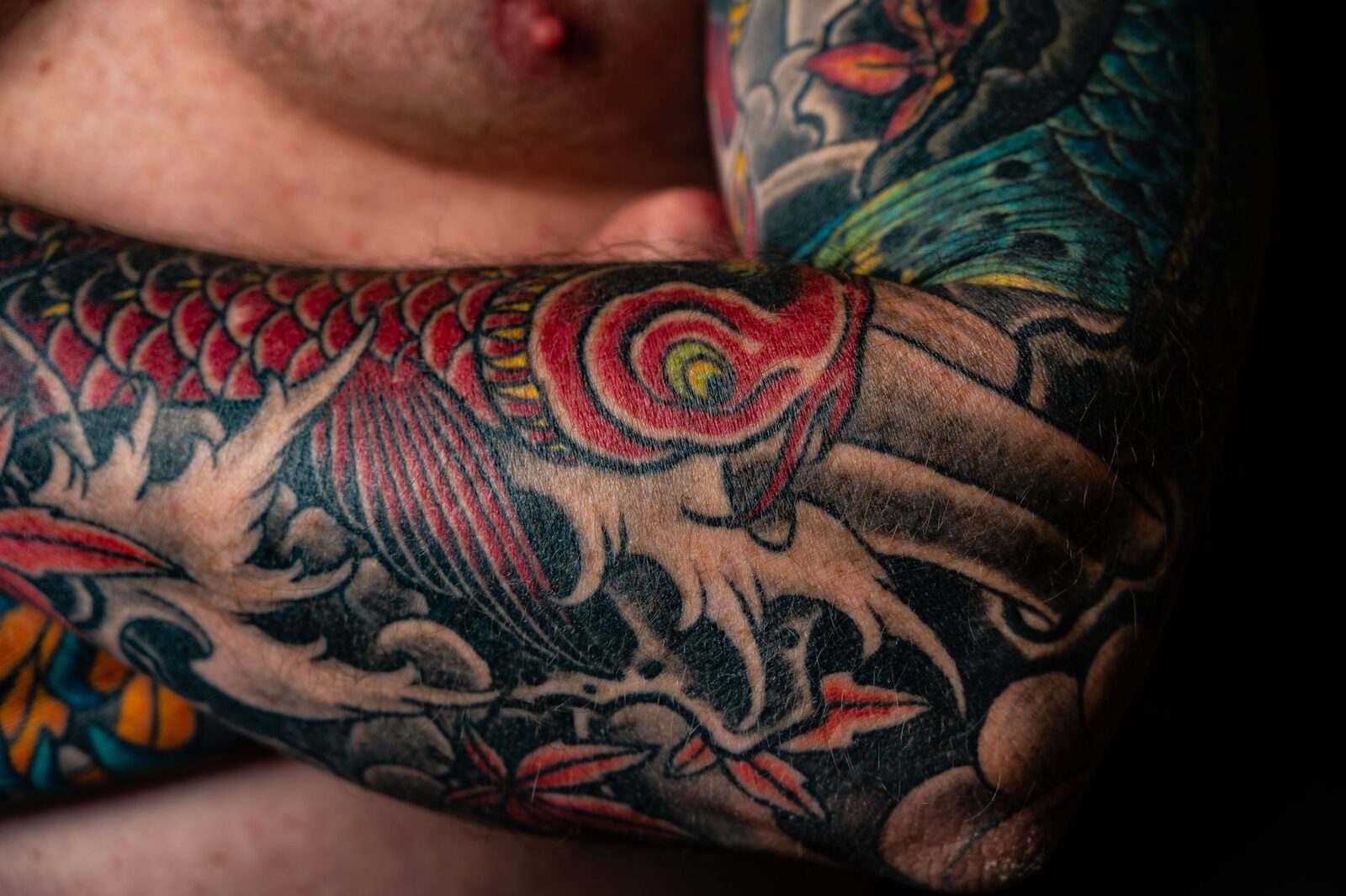
Collins took the sailor tattoos of the 1920s and 1930s and refined them. He was deeply inspired by Japanese tattooing, and combined its sense of composition and bold imagery with American themes. The result was a clean, graphic style that could be read from across a room:
- Heavy black outlines that hold the design together as it ages.
- A limited, saturated palette of reds, yellows, greens and black.
- Simple, iconic subjects: swallows, anchors, ships, hula girls, pin-ups, eagles, panthers, skulls, daggers and roses.
- Banners and lettering for names, mottos and "Mom".
These principles are why well-made traditional tattoos still look good decades later. Our guide to tattoo styles explained covers American traditional alongside other major styles, and our guide to sailor tattoo meanings explains what the swallows, anchors and nautical stars represent.
Sailor Jerry's legacy
Collins died in Honolulu on 12 June 1973. After his death, his shop and its contents were bought by tattoo artist Mike Malone, known as Rollo Banks, who kept the flash in circulation.
His influence carried on through artists he inspired, most notably Don Ed Hardy, who went on to become one of the most important figures in modern tattooing and helped bring Japanese influenced large-scale work to the US.
In 1999, Hardy and Malone partnered with Steven Grasse to form Sailor Jerry Ltd, which licensed Collins' designs for clothing and other products. The company also produced the Sailor Jerry spiced rum, with his artwork on the bottle. The rum brand was acquired by William Grant & Sons in 2008.
Why his flash is still everywhere
- It is timeless. Simple, bold designs look good on almost anyone.
- It ages well. Heavy outlines and solid colour hold up over the years far better than tiny, delicate detail. Compare our guide to how fine line tattoos age.
- It is widely available. His flash has been reprinted and reinterpreted countless times, and many traditional artists still tattoo his designs or their own versions.
Getting a Sailor Jerry style tattoo
If you love his work, look for an artist who specialises in American traditional tattooing. Ask whether they would tattoo a classic Sailor Jerry design, or create their own piece in the same spirit. Traditional flash is often a great choice for a first tattoo, as we explain in first tattoo ideas for men.
For the bigger picture of tattooing in the US, from sailors and circus performers to the mainstream, see our history of tattooing in America.
Biographical details from the Wikipedia article on Sailor Jerry and its cited sources.
News Tattoos
Tattoo enthusiast and writer at News Tattoos. Passionate about tattoo art, culture, and the stories behind the ink. Covering the global tattoo community since 2022.
Get one tattoo story a day on Telegram
New guides, meanings and tattoo news, straight to your phone. Free, no spam.
Keep reading
 Tattoo Culture & History
Tattoo History in America: From Sailors to the Mainstream
 Tattoo Culture & History
Batok: The History of Filipino Tattooing and Apo Whang-Od
 Tattoo Culture & History
Sailor Tattoo Meanings: Swallows, Anchors, Nautical Stars and Hold Fast
 Tattoo Culture & History
96-Year-Old Collingwood Fan Immortalizes Grand Final Victory