
Stick and Poke Tattoos: Risks, Healing and the Professional Option
Hand poked tattoos are one of the oldest ways of tattooing in the world, but DIY stick and pokes carry real risks. Here is what you should know before you try one.
 Save
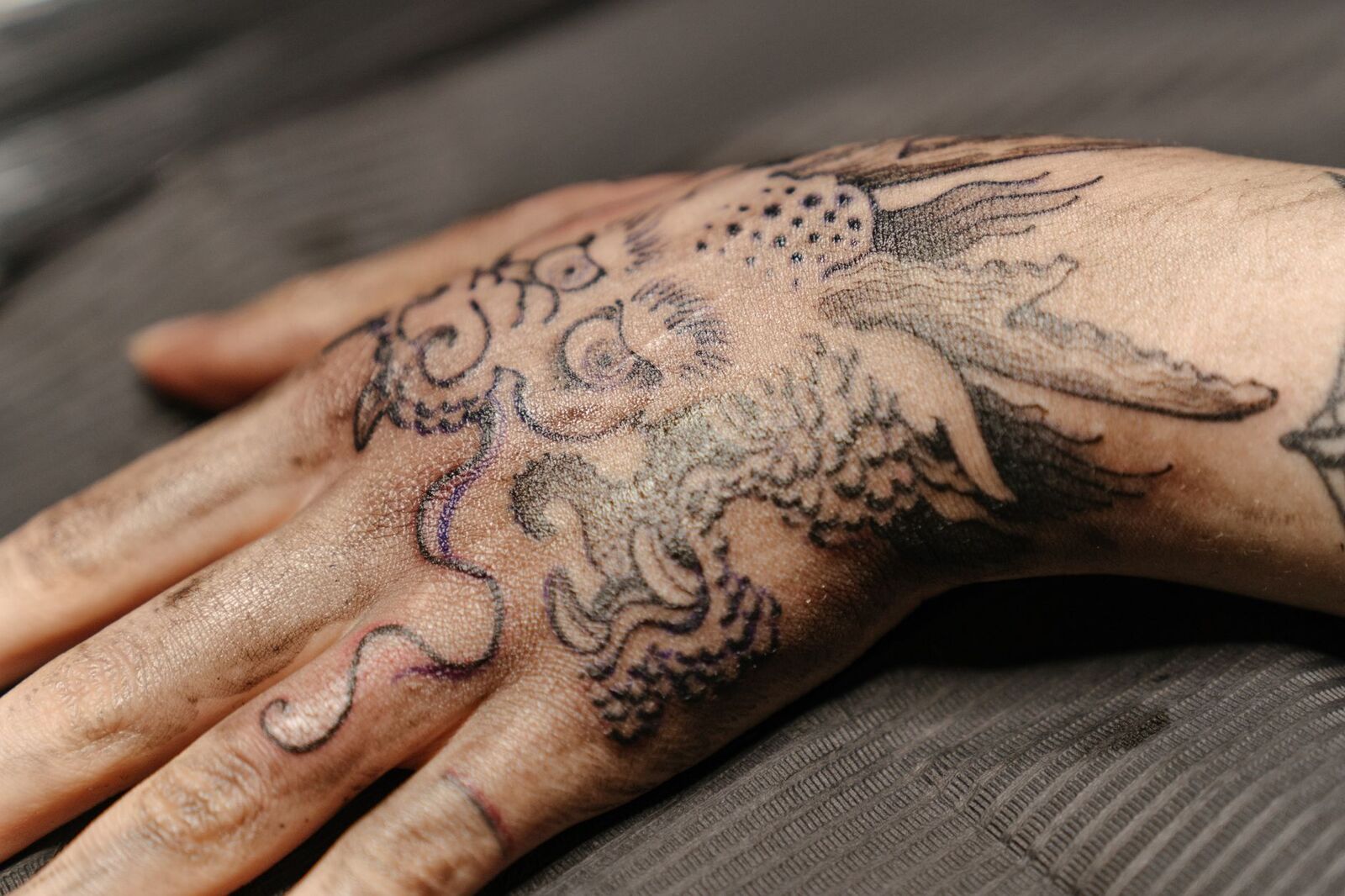
Stick and poke tattoos are having a moment. Small, slightly wobbly hand poked designs are all over social media, DIY kits are easy to buy online, and plenty of people have a tiny poke from a friend at university. But there is a big difference between a professional hand poke tattoo artist and a needle and a bottle of ink at a kitchen table. Here is what you should know.
What is a stick and poke tattoo?
A stick and poke (also called hand poke) tattoo is made without a machine. The artist dips a needle in ink and pushes it into the skin by hand, one dot at a time, building lines and shading from thousands of tiny punctures. It is slower than machine tattooing, often quieter and, for some people, less painful.
Hand poking is ancient. A 2024 study suggested that the 61 tattoos on Ötzi the Iceman, who lived around 5,300 years ago, were most likely made by puncture with a pointed tool; read our guide to Ötzi the Iceman's tattoos. Traditional hand tapping and hand poking practices, such as Filipino batok and Thai sak yant, survive today; see batok and Whang Od and sak yant meaning.
Professional hand poke vs DIY stick and poke
Professional hand poke artists work in licensed studios with sterile, single use needles, tattoo grade inks, gloves and proper hygiene, exactly like machine artists. Their work can be extremely precise.
A DIY stick and poke usually means an untrained person, often a friend or yourself, using a kit bought online or improvised equipment. That is where the risks come in.
The risks of DIY stick and poke tattoos
- Infection. Without sterile technique, bacteria can get into thousands of tiny wounds. Our guide to infected tattoo signs explains what to watch for.
- Blood borne viruses. Sharing needles or ink can spread hepatitis B, hepatitis C and HIV. This is one reason blood services ask about tattoos from unlicensed premises; see can you donate blood with tattoos.
- Unsafe ink. Pen ink, India ink from craft shops and other non tattoo inks are not made for injecting into skin. Even tattoo inks are regulated differently by country; see our guides to the EU tattoo ink rules and US ink regulation.
- Wrong depth. Too shallow and the tattoo fades or falls out as it heals. Too deep and ink can spread under the skin, causing a blurry "blowout"; see tattoo blowout.
- Scarring and allergic reactions, especially with repeated poking in the same spot.
- Regret. Spontaneous tattoos, especially on hands and fingers, are a common source of regret. Our article on what people regret most is worth reading first.
Tattooing is also regulated in many places. In England and Wales, for example, people who tattoo usually need to register with their local council, and in many countries it is illegal to tattoo anyone under 18; see our guide to the legal age for tattoos.
Do stick and poke tattoos last?
A professionally done hand poke tattoo can last just as long as a machine tattoo, because the ink sits at the same depth in the dermis. DIY pokes often fade unevenly or patchily because the depth varies so much from dot to dot. Fine, delicate pokes also soften over the years, just like fine line machine work; see how fine line tattoos age.
Do stick and pokes hurt less?
Many people say hand poking feels less intense than a machine, more like a scratch or a sharp tap than a constant buzz. But sessions take longer, so the overall experience depends on size and placement. Our tattoo pain chart shows which body parts are generally easiest.
How to heal a stick and poke tattoo
Aftercare is the same as for any tattoo:
- Keep it clean and wash gently with mild, unscented soap.
- Pat dry with a clean paper towel.
- Apply a thin layer of fragrance free aftercare cream.
- Do not pick, scratch or soak it; see new tattoo itchy and can you swim after a tattoo.
- Keep it out of the sun while healing.
Hand poked tattoos often heal a little faster and with less swelling than machine work, but follow your artist's instructions and our tattoo healing timeline.
How to find a professional hand poke artist
- Search for "hand poke" or "hand poked" artists in your city and look at healed photos, not just fresh ones.
- Check that they work in a licensed or registered studio.
- Ask about single use needles and how they sterilise their workspace.
- Read reviews and our guide on how to find a good tattoo artist.
Frequently asked questions
Are stick and poke tattoos safe?
Professional hand poke tattoos in a licensed studio are as safe as machine tattoos. DIY stick and pokes carry much higher risks of infection, blood borne viruses and poor results.
Can you use pen ink for a stick and poke?
No. Pen and craft inks are not made for skin and can cause reactions or infection.
Can a stick and poke be covered or removed?
Yes. Small pokes are often easy to cover with a larger piece; see tattoo cover up ideas. Laser removal is also possible.
Sources: Deter-Wolf et al. (2024), European Journal of Archaeology; NHS advice on tattoo risks; UK Local Government (Miscellaneous Provisions) Act 1982 on registration of tattooists.
News Tattoos
Tattoo enthusiast and writer at News Tattoos. Passionate about tattoo art, culture, and the stories behind the ink. Covering the global tattoo community since 2022.
Get one tattoo story a day on Telegram
New guides, meanings and tattoo news, straight to your phone. Free, no spam.
Keep reading
 Tattoo Aftercare & Tips
Tattoo Blowout: Causes, How to Tell It From Healing, and How to Fix It
 Tattoo Inspiration & Ideas
Fine Line Tattoos After 10 Years: How They Really Age
 Tattoo Inspiration & Ideas
Unveiling the Journey of Tattoo Erasure: A Comprehensive Guide to Tattoo Removal
 Tattoo Inspiration & Ideas
Henna Tattoos: How Long They Last, Aftercare and the Black Henna Warning