
Henna Tattoos: How Long They Last, Aftercare and the Black Henna Warning
Henna tattoos last one to three weeks, and placement and the first 24 hours decide how dark they get. Here is how to make yours last, and how to spot the black henna that can scar.
 Save
Save
A henna tattoo is the closest thing to a tattoo with no commitment. No needles, no pain, and it is gone in a couple of weeks. It is also one of the oldest forms of body art in the world, and there is one version of it that can leave you with a permanent scar.
This guide covers what henna actually is, how long it lasts and why, how to make it last longer, and how to spot the "black henna" that dermatologists and the US Food and Drug Administration warn about.
What henna actually is
Henna is a dye made from the dried, powdered leaves of the henna shrub, Lawsonia inermis, which grows in hot, dry regions of North Africa, the Middle East and South Asia. The leaves contain a pigment called lawsone that binds to keratin, the protein in the outer layer of your skin, hair and nails. That is why it stains rather than simply sitting on top.
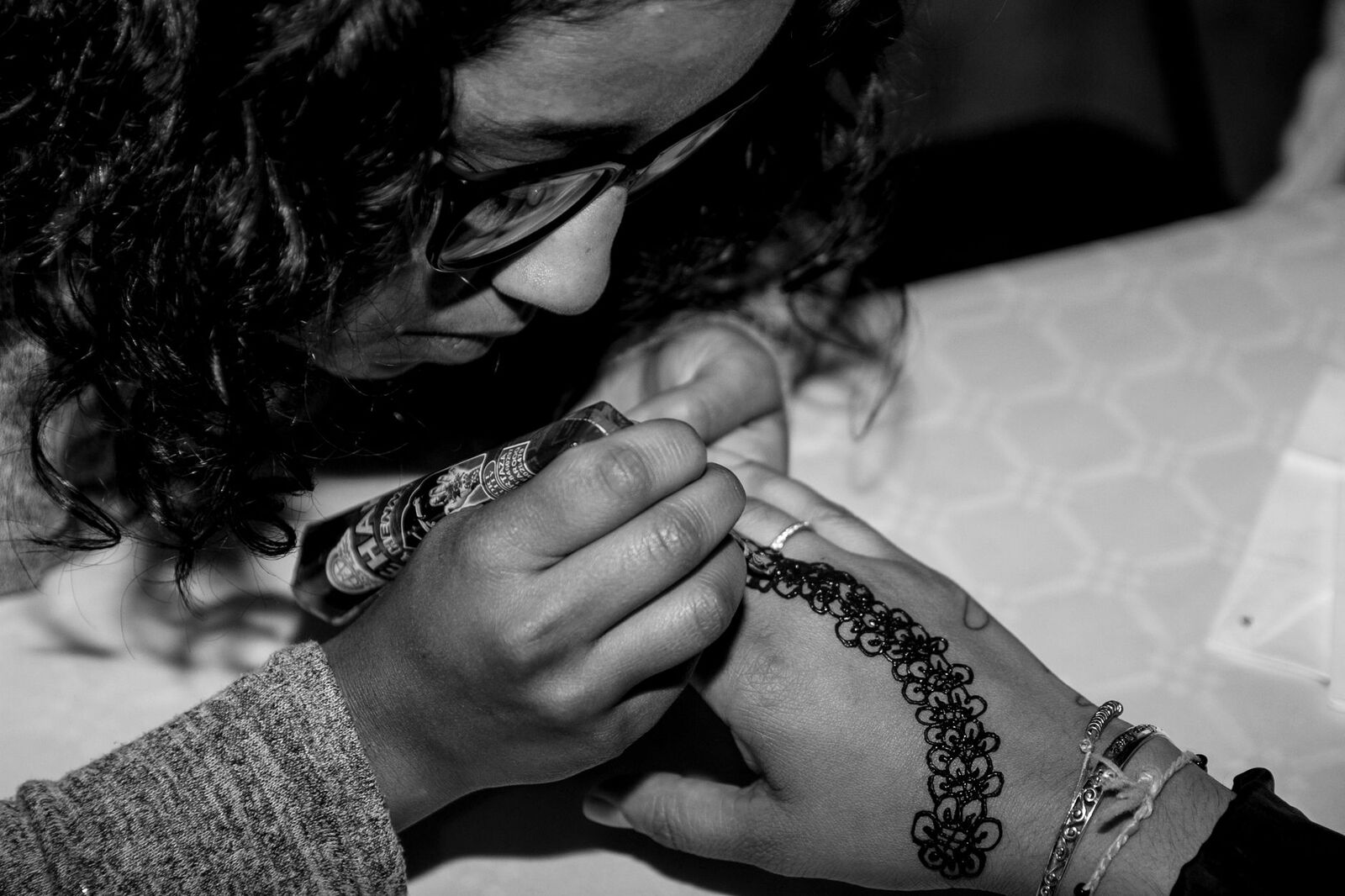
Mixed into a paste and piped onto the skin through a cone, it leaves a stain that starts pale orange and darkens over the next day or two to a rich brown, orange brown or reddish brown. That colour range matters, and we will come back to it.
A tradition thousands of years old
Henna has been used for body decoration across North Africa, the Middle East and South Asia for millennia, and nobody can point to a single place it began. The practice goes by many names. In India and Pakistan it is often called mehndi, and the mehndi night before a wedding, where the bride's hands and feet are covered in intricate patterns, is one of its best known traditions. Eid, Diwali, births and other celebrations carry their own henna customs across Hindu, Muslim, Sikh and Jewish communities.
Styles vary by region. Indian and Pakistani mehndi tends toward dense, lace-like patterns covering the whole hand. Moroccan designs are often geometric and bold. Gulf and Arabic styles favour large flowing florals with more open skin between them. Some motifs carry religious meaning, so if you are choosing a design from a culture that is not your own, it is worth asking the artist what the symbols mean.
How long does a henna tattoo last?
Most henna stains last one to three weeks. The stain does not wash out so much as shed: your skin constantly replaces its outer layer, and the dyed cells go with it.
That is also why placement makes such a difference:
- Palms and soles take the darkest, longest lasting stain, because the skin there is thickest.
- Backs of hands, forearms, ankles and tops of feet stain well and usually last around two weeks.
- Upper arms, back, stomach and chest have thinner skin that renews faster, so the stain is lighter and often fades within a week.
- Face skin sheds quickly and takes only a faint stain.
If you need it for an event, such as a wedding, get it done one to two days beforehand so the colour has time to darken fully before the day.
How to make henna last longer
Almost all of the result is decided in the first 24 hours.
Leave the paste on as long as you can. Aim for at least four to six hours, and overnight is better. The longer the paste is in contact with the skin, the more dye transfers. Wrapping it loosely in tissue and medical tape while you sleep stops it smudging.
Keep it warm. Henna stains more deeply on warm skin. Many artists dab on a little lemon juice and sugar mixture to keep the paste moist and stuck down as it dries.
Scrape, do not wash. When you remove the dried paste, scrape or rub it off rather than rinsing it. Then try to keep water off the area for as long as possible, ideally the first 12 to 24 hours.
Moisturise afterwards. Once it has set, a natural oil or balm protects the stain. Dry skin flakes faster and takes the design with it.
Avoid exfoliating, chlorine and long hot baths. Swimming pools, scrubs and hand sanitiser all speed up fading.
The black henna warning
This is the most important section in the guide.
Real henna cannot produce a black stain. It is brown, orange or reddish brown, full stop. So when a beach stall or holiday kiosk offers a jet black "henna" tattoo that is ready in minutes, it is not henna. According to the FDA, the darkening ingredient in so-called black henna is often a coal tar hair dye containing p-phenylenediamine, known as PPD, which the agency says can cause dangerous skin reactions.
PPD is a legitimate ingredient in permanent hair dye, where it is used in controlled amounts and rinsed off. It is not meant to sit on bare skin for hours. For some people it triggers a severe allergic reaction: blistering, weeping sores and intense itching in the exact shape of the design, which can leave permanent scarring or patches of lighter or darker skin. The reaction often does not appear straight away, so people frequently do not connect it to the tattoo they had days earlier.
There is a lasting consequence too. Once you have been sensitised to PPD, you can react to it for life, which can rule out many hair dyes and some other products afterwards. Children are especially popular targets for holiday black henna, and especially vulnerable.
It is worth knowing that in the US, the FDA has approved henna only as a hair dye, not for use directly on skin. That does not make traditional brown henna dangerous, and reactions to pure henna are uncommon, but it does mean nobody is checking what goes into the paste. You have to.
How to tell if henna is safe
- Look at the paste. Natural henna paste is green, khaki or brown, and smells earthy and herbal. Jet black paste is a warning sign.
- Look at the speed. Real henna needs hours on the skin. Anything that gives a dark result after a quick application is suspect.
- Ask what is in it. A reputable artist will tell you exactly what they use, and many make their own paste from powder, lemon juice, sugar and essential oils. Vague answers mean walk away.
- Be wary of "neutral" or "natural black" labels with no ingredient list.
- If you have sensitive skin, ask for a small patch test first.
If you do react to a temporary tattoo, see a doctor or pharmacist, and tell them it may have contained PPD. In the US you can also report the reaction to the FDA.
Jagua: the safe way to get a dark design
If you want a dark blue-black temporary design, the safer option is jagua, a gel made from the fruit of the Genipa americana tree, used for body art by Indigenous peoples in Central and South America. It develops into a deep blue-black stain over a day or so and lasts a similar length of time to henna. As with any skin product, a small number of people can react to it, so a patch test is sensible.
Henna and your real tattoos
Henna is a popular way to trial a design or placement before committing to ink. Wearing a pattern for two weeks tells you a great deal about whether you would actually enjoy seeing it every day, and it is a good antidote to the rushed decisions behind the tattoos people regret most.
If you already have tattoos, there is no problem applying natural henna over healed ink. Do not apply anything to a tattoo that is still healing, though. Our tattoo healing timeline explains how long to wait, and if you are weighing up the real thing, our guides to tattoo pain by body part and how much a tattoo costs cover the practical side.
Sources: US Food and Drug Administration, "Temporary Tattoos, Henna/Mehndi, and Black Henna: Fact Sheet," updated October 2024.
News Tattoos
Tattoo enthusiast and writer at News Tattoos. Passionate about tattoo art, culture, and the stories behind the ink. Covering the global tattoo community since 2022.
Get one tattoo story a day on Telegram
New guides, meanings and tattoo news, straight to your phone. Free, no spam.
Keep reading
 Tattoo Culture & History
Tattoos in the Bible: What Leviticus 19:28 Really Says
Tattoo Culture & History
Tattoos in the Bible: What Leviticus 19:28 Really Says
 Tattoo Culture & History
Tā Moko: The Meaning of Māori Tattoos and How to Respect Them
Tattoo Culture & History
Tā Moko: The Meaning of Māori Tattoos and How to Respect Them
 Tattoo Culture & History
Tattoo History in America: From Sailors to the Mainstream
Tattoo Culture & History
Tattoo History in America: From Sailors to the Mainstream
 Tattoo Culture & History
Batok: The History of Filipino Tattooing and Apo Whang-Od
Tattoo Culture & History
Batok: The History of Filipino Tattooing and Apo Whang-Od