
Dragon Tattoo Meaning: Chinese, Japanese and European Dragons Explained
A dragon tattoo can mean good fortune, wisdom or chaos depending on where the design comes from. How to tell Chinese, Japanese and European dragons apart, and the styles and placements that suit each.
 Save
Save
The dragon is one of the oldest and most requested subjects in tattooing, and one of the most misunderstood. Depending on where your design comes from, the dragon tattoo meaning can be good fortune and rain, wisdom and protection, or chaos and destruction.
That difference is not a detail. A Chinese dragon, a Japanese dragon and a European dragon look different, behave differently in their legends, and say very different things when tattooed on your body. Here is how to tell them apart, and how to choose the right one.
Eastern and Western dragons: two opposite ideas
In East Asian traditions, the dragon is overwhelmingly a benevolent creature: a bringer of rain, a guardian and a symbol of power used wisely. In European legend, the dragon is usually the villain, a fire breathing monster hoarding treasure until a hero slays it.
So before anything else, decide which story you want your tattoo to tell.
The Chinese dragon (long)
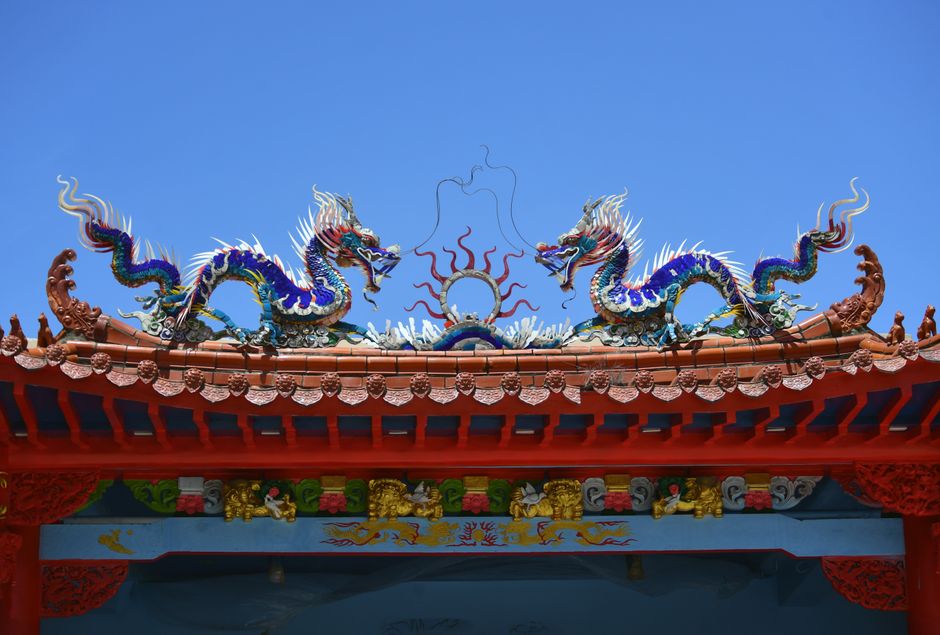
What it means: The Chinese dragon, or long, traditionally symbolises auspicious power, especially control over water and weather. It was believed to rule rivers, waterfalls and seas and to bring the rain that farming depended on, which is why it became linked with prosperity, strength and good fortune.
What it looks like: A long, serpentine body with no wings, four legs, whiskers, a flowing mane and often antlers. It moves through clouds or waves rather than flying on wings. A Han dynasty scholar famously described it as a composite of other animals, with the antlers of a stag, the neck of a snake, the scales of a carp and the claws of an eagle.
The claws matter. Chinese dragons became symbols of imperial power, and their claw count was regulated. During the Yuan dynasty, the five clawed dragon was reserved for the emperor, while four clawed dragons were used by princes and nobles, and this restriction continued through the Ming and Qing dynasties. A five clawed dragon in a tattoo therefore carries the strongest association with authority and status.
The pearl. Chinese dragons are often shown chasing or holding a flaming pearl, commonly read as wisdom, spiritual energy or prosperity.
The zodiac. The dragon is one of the twelve animals of the Chinese zodiac, so some people choose a dragon tattoo simply because they were born in a Dragon year.
The Japanese dragon (ryū)
What it means: Japanese dragons developed from Chinese ones and share their association with water, but in Japanese tattooing they are especially linked with wisdom, strength and protection. In traditional Japanese tattooing, the dragon is one of the most powerful and respected subjects.
What it looks like: Similar in body to the Chinese dragon, but three claws are common in Japanese depictions. That is one of the easiest ways to recognise a design's origin at a glance.
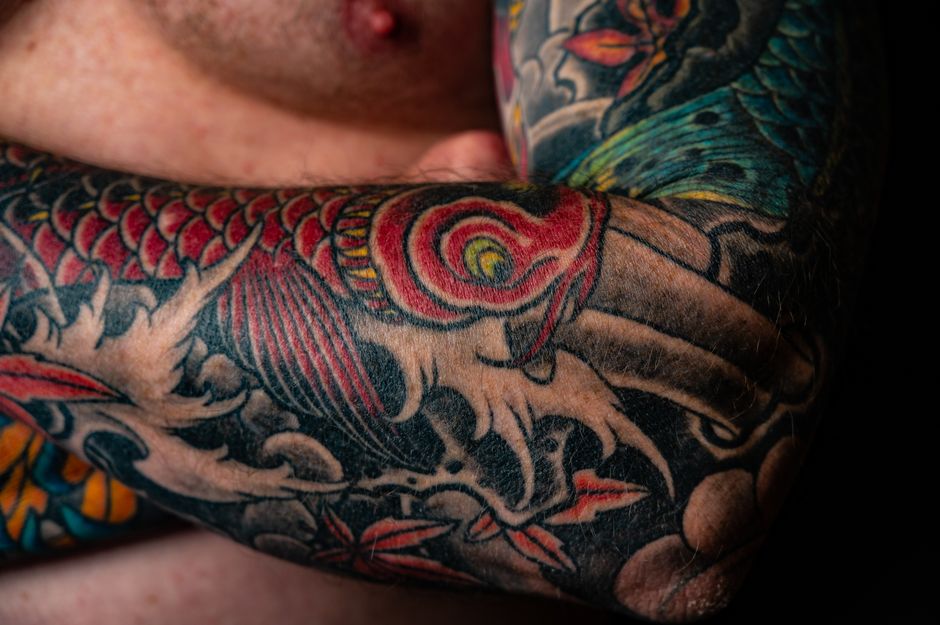
How it is tattooed: In Japanese work, the dragon is rarely a standalone sticker. It is part of a full composition, framed by wind bars, clouds, waves or fire, and paired with other classic subjects such as the tiger, the koi or peonies. The dragon and tiger together represent opposing forces, and a koi swimming upstream is associated with the legend of the carp that becomes a dragon. Designs are planned to flow with the body, which makes the dragon ideal for sleeves, back pieces and chest panels. For more on the tradition, see our article on the history of Japanese tattooing.
The European dragon
What it means: In medieval European legend, the dragon is typically a destructive force: a guardian of treasure, a symbol of greed, sin or chaos, and the enemy slain in stories such as Saint George and the dragon. In heraldry, however, the dragon was also adopted as a badge of strength and ferocity, and the red dragon of Wales remains a proud national emblem.
What it looks like: A heavy, reptilian body, four legs, large bat like wings, and usually fire.
As a tattoo, a European dragon suits themes of power, defiance, protection of what you value, or overcoming something that tried to destroy you. It also pairs naturally with fantasy, medieval and gaming imagery, as well as knights, swords and castles.
Popular dragon tattoo styles
- Traditional Japanese: bold outlines, strong colour or black and grey, and full background elements. The classic choice for a large piece.
- Black and grey realism: detailed scales and texture with a dramatic, almost sculptural feel.
- Fine line: a slim single needle dragon winding along the spine, forearm or collarbone. Hugely popular, but very fine detail can soften over time, so do not go too small.
- American traditional: a chunky, simplified dragon with bold lines and limited colour that ages extremely well.
- Tribal and blackwork: a silhouette or pattern based dragon in solid black.
- Ornamental and watercolour: dragons combined with mandalas, splashes of colour or flowers for a softer look.
Where to place a dragon tattoo
A dragon's long body is its greatest asset, so the best placements give it room to move.
- Spine: a vertical dragon down the back is one of the most popular designs of recent years.
- Full sleeve or half sleeve: the body can wrap around the arm. Our guide to arm tattoos for men covers sleeve planning.
- Back piece: the traditional Japanese showcase.
- Shoulder and chest: the dragon's head on the chest with the body curling over the shoulder. See our guide to shoulder tattoos for men.
- Ribs and side: ideal for a long, curving dragon, though the ribs are one of the more painful spots, as explained in our guide to tattoo pain by body part.
- Leg and thigh: plenty of space for a large, detailed piece.
What colour means
Colour symbolism for dragons varies widely between sources and traditions, so treat any single chart with caution. In Chinese culture, gold and yellow have strong imperial associations and red is associated with good luck and celebration. Beyond that, many tattoo artists simply choose colours for composition and contrast. If a particular colour meaning matters to you, discuss it with an artist who specialises in that tradition.
Before you book
Dragons reward skill and punish shortcuts. Scales, movement and a convincing flow over the body are hard to draw well. Choose an artist whose healed dragon work you have seen, and if you want an authentic Japanese or Chinese style piece, seek out someone who specialises in it.
Large dragon pieces take many sessions, so it is worth understanding the budget early. Our guide to how much a tattoo costs explains hourly and day rates, and our list of tattoo red flags will help you choose a studio.
Historical details on Chinese dragons, including claw conventions and the imperial five clawed dragon, draw on the Chinese dragon article and its cited sources.
News Tattoos
Tattoo enthusiast and writer at News Tattoos. Passionate about tattoo art, culture, and the stories behind the ink. Covering the global tattoo community since 2022.
Get one tattoo story a day on Telegram
New guides, meanings and tattoo news, straight to your phone. Free, no spam.
Keep reading
 Tattoo Culture & History
Tā Moko: The Meaning of Māori Tattoos and How to Respect Them
Tattoo Culture & History
Tā Moko: The Meaning of Māori Tattoos and How to Respect Them
 Tattoo Culture & History
Sailor Tattoo Meanings: Swallows, Anchors, Nautical Stars and Hold Fast
Tattoo Culture & History
Sailor Tattoo Meanings: Swallows, Anchors, Nautical Stars and Hold Fast
 Tattoo Culture & History
Japanese Tattoo Yakuza: History and Modern Culture
Tattoo Culture & History
Japanese Tattoo Yakuza: History and Modern Culture
 Tattoo Artist Spotlights
Stories In Ink Ottawa Celebrates Black Creatives
Tattoo Artist Spotlights
Stories In Ink Ottawa Celebrates Black Creatives