
Auschwitz Tattoos: The History of the Numbers and the Descendants Who Carry Them
Auschwitz was the only Nazi camp that systematically tattooed its prisoners. The history of those numbers, how they were made, and why some descendants of survivors now carry them on their own skin.
 Save
Save
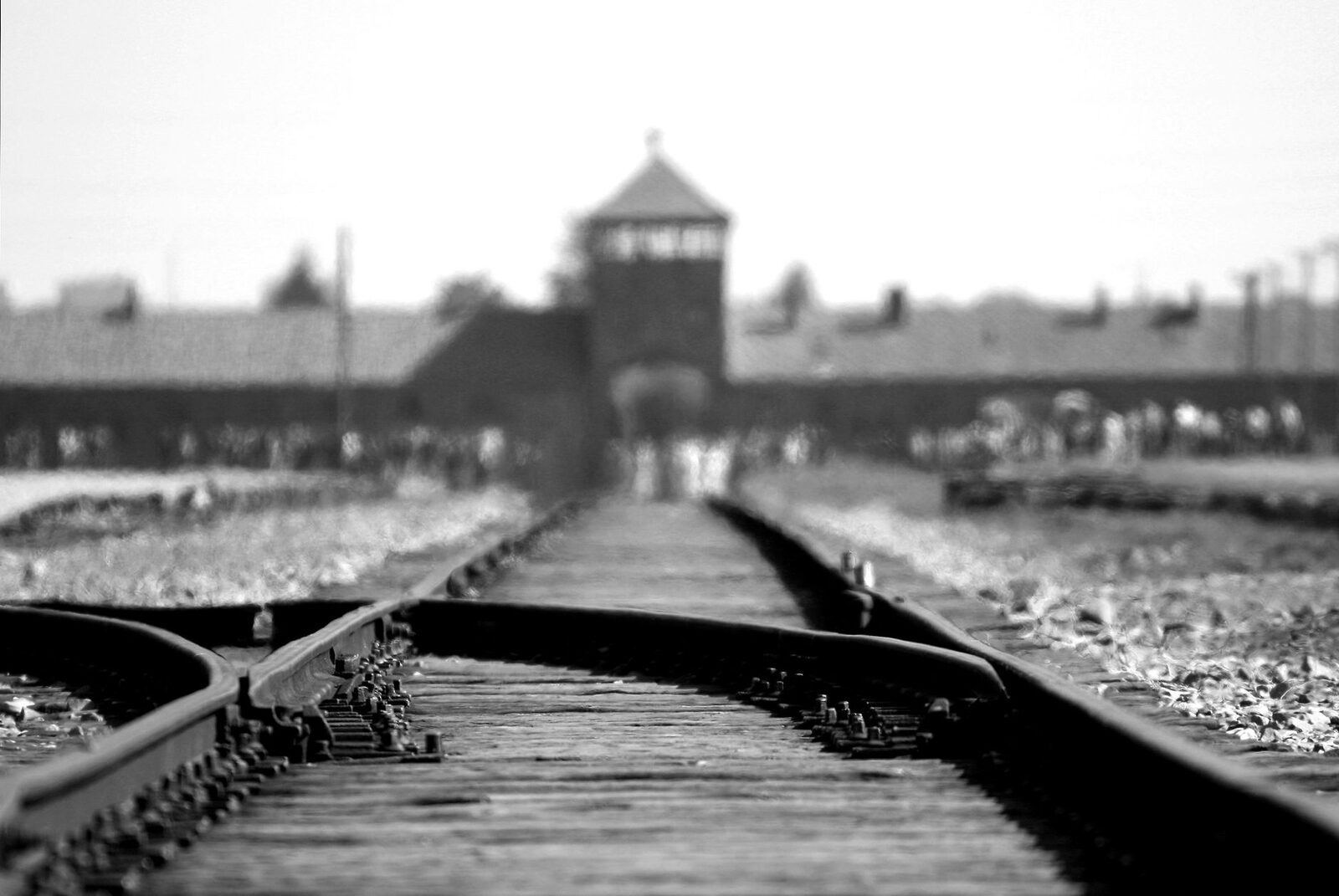
Of all the tattoos in modern history, few carry the weight of the numbers inked onto the arms of prisoners at Auschwitz. An Auschwitz tattoo was not chosen, and it was never meant to mean anything except that a human being had been reduced to a serial number.
Eight decades later, those numbers have become one of the most recognisable symbols of the Holocaust, and some descendants of survivors have made the profound decision to carry them on their own skin. This is the history of the Auschwitz tattoos, and the story of what they have come to mean.
Why Auschwitz tattooed its prisoners
According to the United States Holocaust Memorial Museum, Auschwitz was the only Nazi concentration camp complex where prisoners were systematically tattooed with their serial numbers.
The practice began with Soviet prisoners of war, who were brought to the camp from October 1941 and began to be tattooed the following month. In spring 1942, the SS began systematically tattooing incoming Jewish prisoners, and by early 1943 the practice had expanded to almost all incoming prisoners. The number was usually placed on the lower left arm.
The purpose was administrative and dehumanising. Prisoners died in such numbers, and in such conditions, that the camp authorities used the tattoo to identify bodies. A person's name was replaced by a number.
How the tattoos were made
At first, the SS used a metal stamp fitted with interchangeable numbers made of needles around a centimetre long, which was struck into the skin before ink was rubbed into the wounds. This method was later replaced by a single needle device that pierced the outline of each digit.
Different series of numbers were used over time, including separate sequences for women, for Soviet prisoners of war, and for Roma prisoners, whose numbers were prefixed with the letter Z. In 1944, as hundreds of thousands of Hungarian Jews were deported to the camp, new series prefixed with the letters A and B were introduced. The museum records that the camp authorities assigned more than 400,000 prisoner serial numbers in total.
Not everyone who entered Auschwitz was tattooed. Most notably, the Jews selected for immediate death in the gas chambers on arrival were never registered and never given a number at all. Some groups of German prisoners, and Polish civilians deported after the 1944 Warsaw Uprising, were also not tattooed.
The number after liberation
For survivors, the tattoo became a permanent part of life after the war. Some chose to have it removed. Many kept it, whether as evidence, as a reminder, or simply because it had become part of them. Some spoke about it openly with children and grandchildren, and others never discussed it at all.
In families where the past was rarely spoken of, the number on a parent's or grandparent's arm was often the most visible sign of what had happened.
Descendants who carry the number
As the generation of survivors passes away, a small number of their children and grandchildren have chosen to have a relative's Auschwitz number tattooed on their own bodies.
Alice Bloch, a professor of sociology at the University of Manchester, has studied this practice through interviews with 16 descendants, 13 in Israel and three in the United States, and wrote about her research for The Conversation. The people she spoke with made their decisions in very different ways. Some waited until their survivor relative had died. Some asked permission first. Others did not. The tattoos themselves differ too: some copy the original exactly, in the same place on the arm, while others change the placement, the lettering or the colour.
Bloch describes the practice as a form of memorial that speaks directly to each family's own history, and above all as an expression of love for the survivor and a way of keeping the memory of the Holocaust alive. As she puts it, when there are no survivors left to tell their own stories, these descendants will stand as a living reminder of where racism and hatred can lead.
A contested choice
Replicating an Auschwitz number is not universally embraced. Tattooing is traditionally discouraged in Jewish law, a tension many observant families feel strongly, and many people still believe a tattooed person cannot be buried in a Jewish cemetery, although most rabbinic authorities describe that as a myth. Some survivors and their families have been uncomfortable with the idea of reproducing a mark that was forced on their relatives by their persecutors.
For those who choose it, the meaning is deliberately reversed. What was imposed as a symbol of dehumanisation becomes a chosen, personal act of remembrance and identity.
Why these tattoos matter to tattoo history
Tattoos have always carried power in both directions. They have been used for centuries to mark, punish and control people, from criminals branded by the state to enslaved people and prisoners. They have also been used to reclaim identity, honour ancestors and remember the dead.
The Auschwitz numbers sit at the darkest end of that history. The descendants who now wear them show how a mark designed to erase a person can, in the hands of their family, become a way of making sure they are never forgotten. For more on how tattoos have been used to reclaim painful pasts, see our look at how World War II changed tattoo culture.
Sources: United States Holocaust Memorial Museum, "Tattoos and Numbers: The System of Identifying Prisoners at Auschwitz"; Alice Bloch, "Descendants of Holocaust survivors explain why they are replicating Auschwitz tattoos on their own bodies," The Conversation.
News Tattoos
Tattoo enthusiast and writer at News Tattoos. Passionate about tattoo art, culture, and the stories behind the ink. Covering the global tattoo community since 2022.
Get one tattoo story a day on Telegram
New guides, meanings and tattoo news, straight to your phone. Free, no spam.
Keep reading
 Tattoo Culture & History
Tattoos in the Bible: What Leviticus 19:28 Really Says
Tattoo Culture & History
Tattoos in the Bible: What Leviticus 19:28 Really Says
 Tattoo Culture & History
Tā Moko: The Meaning of Māori Tattoos and How to Respect Them
Tattoo Culture & History
Tā Moko: The Meaning of Māori Tattoos and How to Respect Them
 Tattoo Culture & History
Tattoo History in America: From Sailors to the Mainstream
Tattoo Culture & History
Tattoo History in America: From Sailors to the Mainstream
 Tattoo Culture & History
Batok: The History of Filipino Tattooing and Apo Whang-Od
Tattoo Culture & History
Batok: The History of Filipino Tattooing and Apo Whang-Od