
Tattoo History Timeline: 5,000 Years of Ink, From Ötzi to Today
From Ötzi the Iceman's 61 tattoos and the oldest figurative tattoos in Egypt to Polynesia, Japan and the first electric tattoo machine in 1891. The history of tattoos as a timeline.
 Save
Save
Tattooing is one of the oldest art forms humans have. Long before writing, cities or metal tools, people were marking their skin with ink. From an Ice Age hunter in the Alps to the electric machine patented in New York, here is the tattoo history timeline, from the first marks to today.
Around 3300 BC: Ötzi the Iceman
The oldest preserved tattooed human body belongs to Ötzi, a man who died in the Alps around 5,300 years ago and was found by hikers on the border of Italy and Austria in 1991. Researchers using multispectral imaging mapped 61 tattoos on his body, simple groups of parallel lines and crosses.
Many of them sit over joints and the lower back, places associated with wear and pain, which has led researchers to suggest they may have been therapeutic rather than decorative. A 2024 study concluded they were most likely made by hand-poking, the same basic technique still used today.
Around 3351 to 3017 BC: the first figurative tattoos
In 2018, researchers at the British Museum announced that infrared imaging had revealed tattoos on two naturally mummified bodies from Gebelein in Upper Egypt, dating to roughly the same period as Ötzi. A man had a wild bull and a Barbary sheep on his upper arm, and a woman had S-shaped motifs on her arm and shoulder.
These are the oldest known figurative tattoos, meaning they depict recognisable things rather than lines or dots, and they showed that both men and women were tattooed in predynastic Egypt.
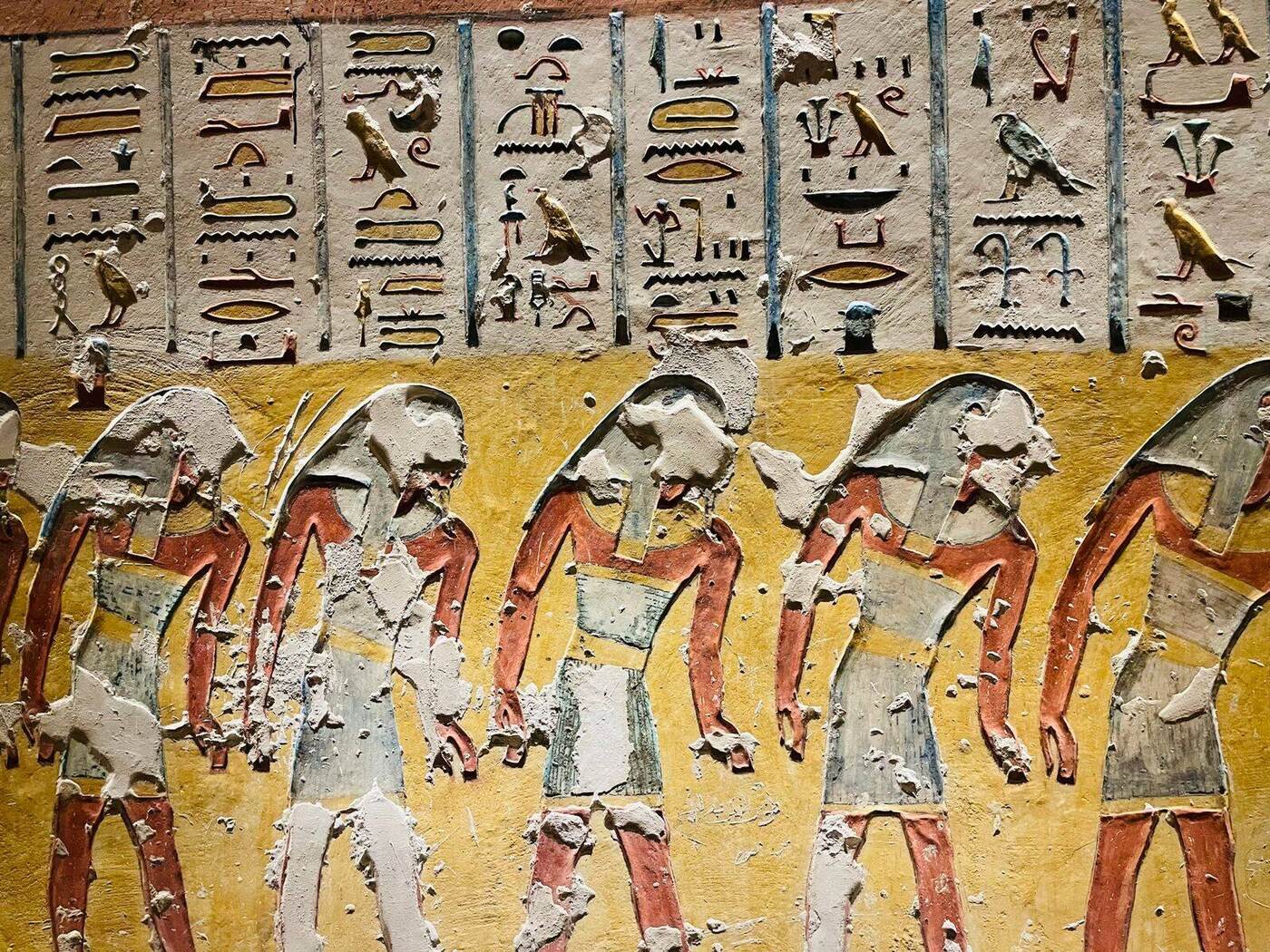
Ancient Egypt and Nubia
Tattooed female mummies from later periods of Egyptian history show dot and dash patterns, often on the abdomen, thighs and chest. Scholars continue to debate their meaning, with protection during pregnancy and childbirth among the leading interpretations.
Around 500 BC: the Scythians and Pazyryk
Nomadic horse peoples of the Eurasian steppes buried their dead in frozen tombs in the Altai Mountains. Mummies from the Pazyryk culture carry elaborate tattoos of real and mythical animals, deer, big cats and griffin-like creatures, wrapping their arms and shoulders. They are among the most artistically sophisticated ancient tattoos ever found.
Ancient Greece and Rome: tattoos as punishment
In the classical Mediterranean, tattooing was associated less with art and more with control. Greek and Roman writers describe enslaved people, criminals and prisoners of war being marked, and the Greek word stigma, originally meaning a mark made by a pointed instrument, is the root of the English word "stigma." This punitive history shaped Western attitudes to tattoos for centuries.
Polynesia: tattooing as identity
Across the Pacific, tattooing developed into one of the world's richest traditions. In Samoa, the pe'a and malu mark adulthood and status. In New Zealand, Māori tā moko records identity and ancestry, traditionally carved into the skin with chisels. The English word "tattoo" itself comes from the Polynesian tatau, recorded by European voyagers in the 18th century.
Read more in Tā Moko: the meaning of Māori tattoos.
Japan: from punishment to art
Japan also used tattoos to mark criminals, but during the Edo period (1603 to 1868) elaborate decorative tattooing, known today as irezumi, flourished alongside woodblock prints of heroes and legends. Tattooing was later banned during Japan's modernisation and associated with organised crime, a history we explore in our article on Japanese tattoos and the yakuza.
The stigma still echoes today in Japan's onsen tattoo rules.
The Philippines: batok
In the mountains of northern Luzon, the Kalinga and other peoples practised batok, hand-tapped tattooing using a thorn and soot. It marked warriors, beauty and community. The tradition has been kept alive into the 21st century, most famously by the elderly mambabatok Whang-Od.
We tell the full story in Batok: the history of Filipino tattooing and Apo Whang-Od.
1700s and 1800s: sailors carry tattoos around the world
European sailors who reached the Pacific began getting tattooed and bringing the practice home. By the 19th century, sailor tattoos such as anchors, swallows and nautical stars were common in port cities, and professional tattooists were working in London and New York. Tattoos even became fashionable among some European aristocrats.
See what those designs meant in sailor tattoo meanings.
1891: the electric tattoo machine
On 8 December 1891, New York tattooist Samuel O'Reilly patented the first electric tattoo machine. He adapted Thomas Edison's electric pen, a device patented in 1876 for making stencils of documents, into a machine that could drive a needle into the skin far faster than any hand method. It transformed tattooing from a slow craft into something quick, cheaper and widely available.
20th century: war, circus and counterculture
Heavily tattooed performers became attractions at circuses and sideshows. World War I and World War II sent millions of servicemen through tattoo parlours, as we explain in our piece on how World War II changed tattoo culture. The same century also saw tattooing used for horror: the Nazis systematically tattooed prisoners at Auschwitz, a history we cover in our article on Auschwitz tattoos.
From the 1960s and 1970s, tattoos became linked with bikers, punk and rock music, while artists pushed the craft toward fine art.
Meet Maud Wagner, America's first known female tattoo artist, and Sailor Jerry, who shaped American traditional; the wider story is in tattoo history in America.
21st century: tattoos go mainstream
Today tattoos are more common than ever. A 2023 Pew Research Center survey found that 32 percent of American adults have at least one tattoo. Styles range from fine line and realism to revived traditional techniques from Polynesia and the Philippines, and research into tattoo ink safety has led to new regulations in the EU and the US.
For a closer look at what people feel about their tattoos today, read our breakdown of tattoo regret statistics.
Sources: Samadelli et al., "Complete mapping of the tattoos of the 5300-year-old Tyrolean Iceman," Journal of Cultural Heritage (2015), as reported by Smithsonian Magazine; British Museum research on the Gebelein mummies as reported by CNN; Smithsonian Lemelson Center on O'Reilly's patent; Pew Research Center.
News Tattoos
Tattoo enthusiast and writer at News Tattoos. Passionate about tattoo art, culture, and the stories behind the ink. Covering the global tattoo community since 2022.
Get one tattoo story a day on Telegram
New guides, meanings and tattoo news, straight to your phone. Free, no spam.
Keep reading
 Tattoo Culture & History
Tattoo Anthropology: How Scholars Study Culture
Tattoo Culture & History
Tattoo Anthropology: How Scholars Study Culture
 Tattoo Culture & History
Tattoo History in America: From Sailors to the Mainstream
Tattoo Culture & History
Tattoo History in America: From Sailors to the Mainstream
 Tattoo Culture & History
Batok: The History of Filipino Tattooing and Apo Whang-Od
Tattoo Culture & History
Batok: The History of Filipino Tattooing and Apo Whang-Od
 Tattoo Culture & History
Sailor Tattoo Meanings: Swallows, Anchors, Nautical Stars and Hold Fast
Tattoo Culture & History
Sailor Tattoo Meanings: Swallows, Anchors, Nautical Stars and Hold Fast